The last few years have represented a defining growth phase for ResearchGains, marked by rising participation, a rapidly expanding researcher base, and clearer demographic patterns in research engagement. This yearly recap draws from key interpretations across multiple charts to tell a cohesive story of how the platform has evolved between 2023 and 2025. Rather than focusing only on counts, this review highlights what these trends reveal about access, inclusion, and the future of data driven research on ResearchGains.
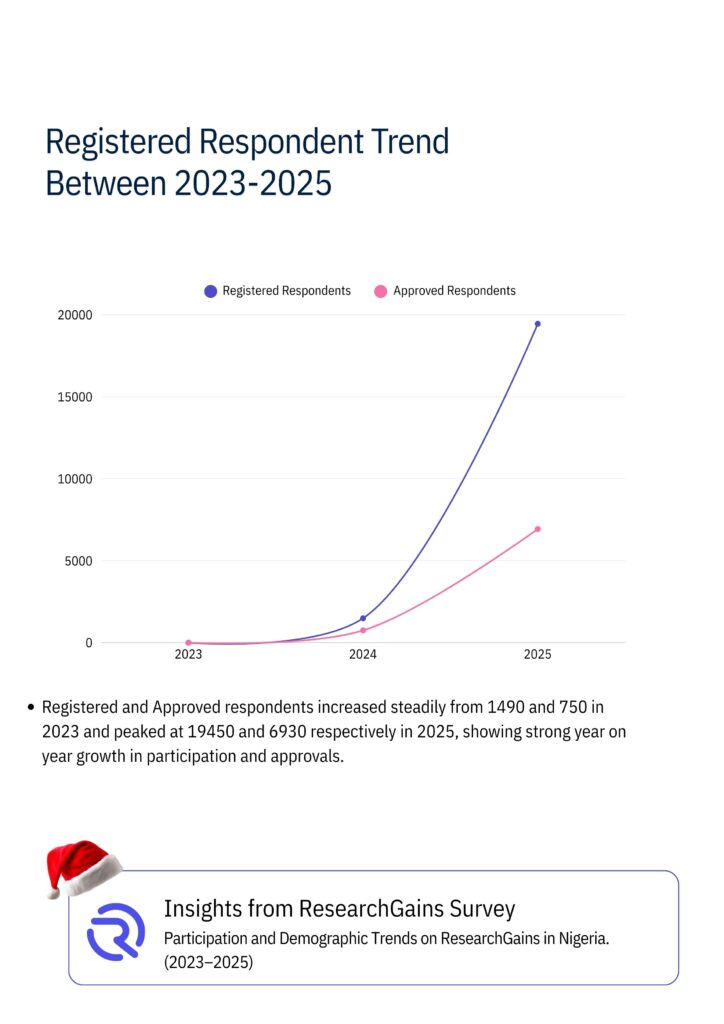
One of the strongest indicators of platform growth is the steady rise in registered and approved respondents. In 2023, registered respondents stood at 1490, while approved respondents were 750. By 2025, these figures had climbed sharply to 19450 registered respondents and 6930 approved respondents. This consistent increase points to growing awareness of ResearchGains and a higher willingness among individuals to participate in research. At the same time, the difference between registration and approval figures reflects a structured approval process that prioritizes data quality as participation scales.
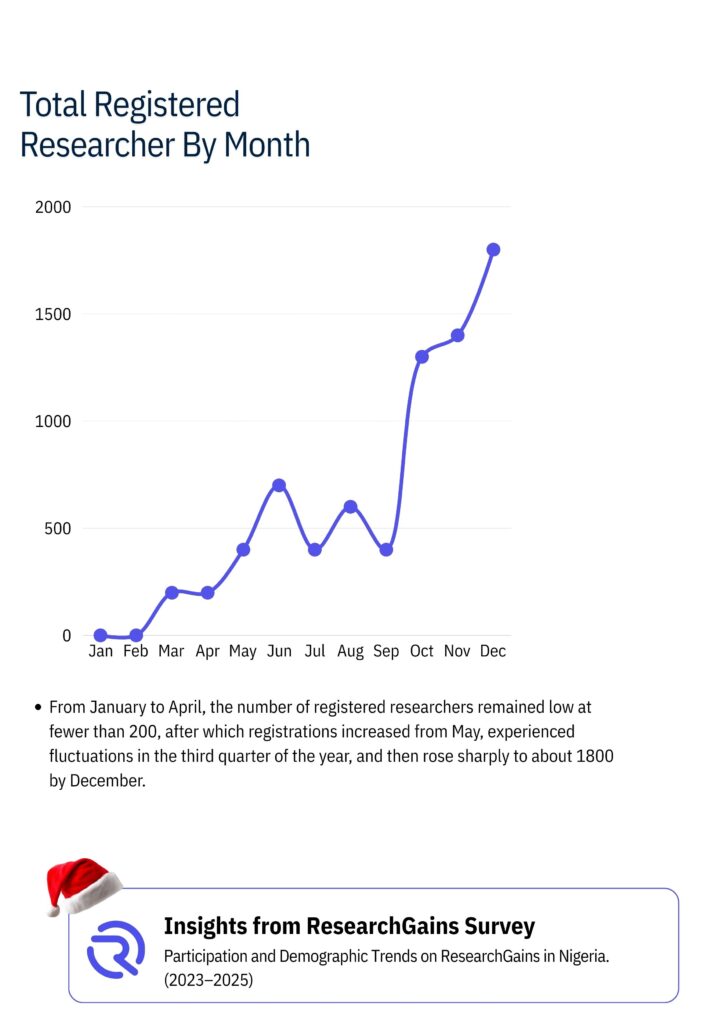
Researcher registration showed a more seasonal pattern within the year. From January to April, the number of registered researchers remained below 200. Growth began in May, followed by noticeable fluctuations during the third quarter. By December, registrations rose sharply and peaked at about 1800 researchers. These movements suggest that researcher activity is closely tied to academic schedules, project timelines, and funding cycles, with the strongest push occurring toward the end of the year.
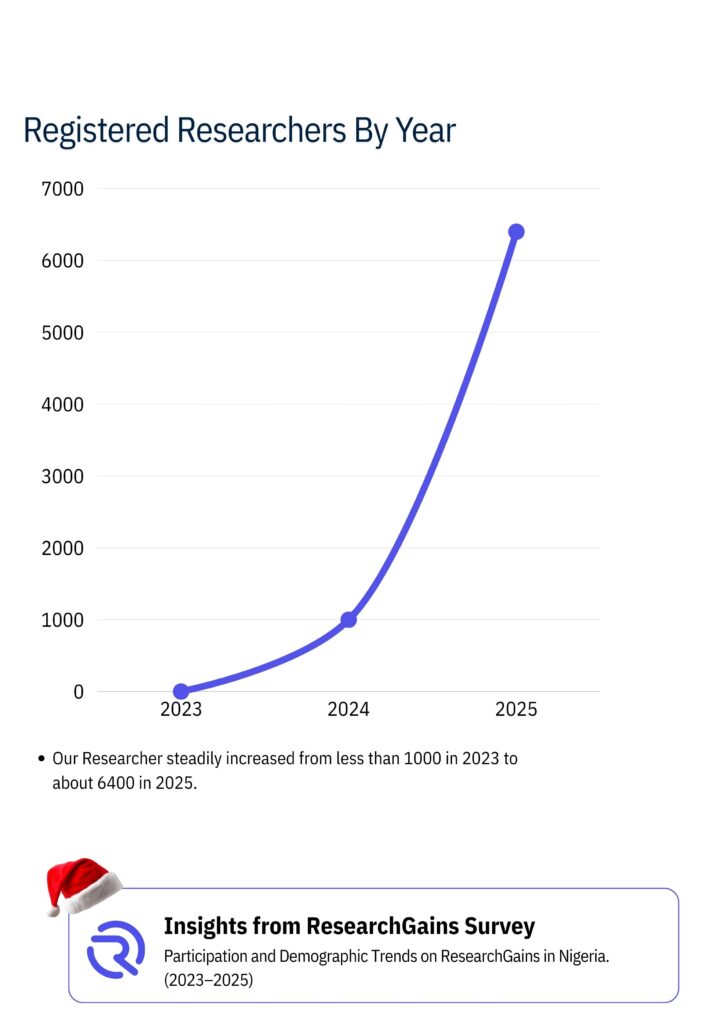
Beyond monthly trends, the long term growth in the researcher community is equally notable. The total number of researchers on ResearchGains increased from fewer than 1000 in 2023 to about 6400 in 2025. This steady rise indicates increasing trust in the platform as a reliable space for data collection and insight generation, especially among researchers seeking access to diverse respondent pools.
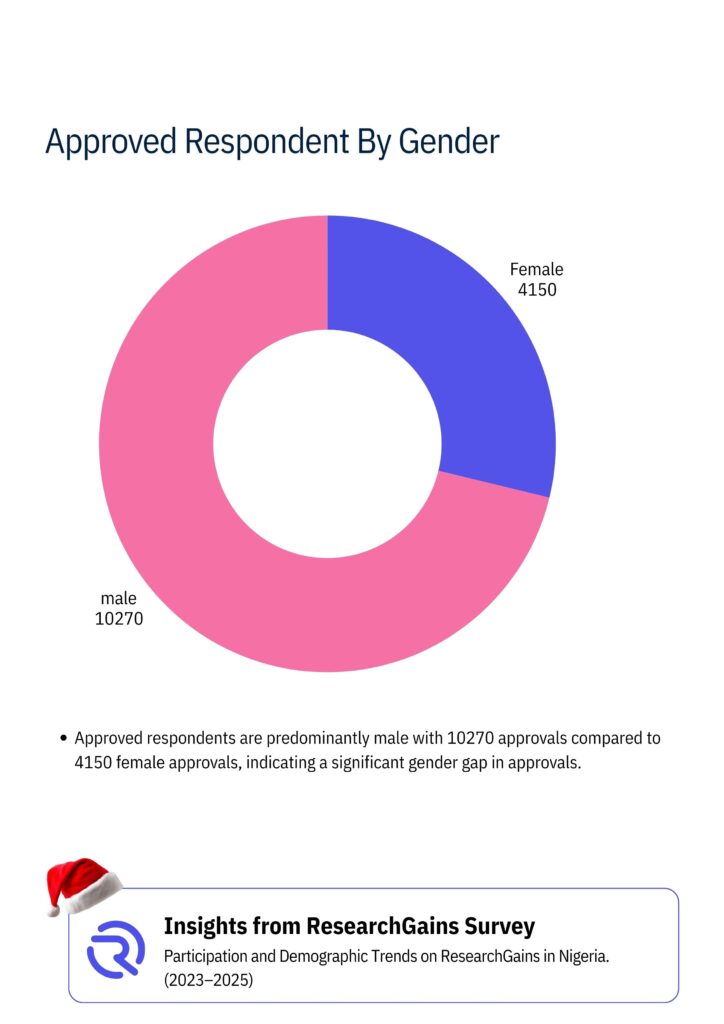
Demographic analysis of approved respondents reveals important participation gaps. Male respondents account for 10270 approvals, compared to 4150 approvals among female respondents. This imbalance highlights a significant gender gap in approvals and suggests the need for more deliberate strategies to encourage and support female participation. Without improved balance, research outcomes risk reflecting a narrower range of perspectives.
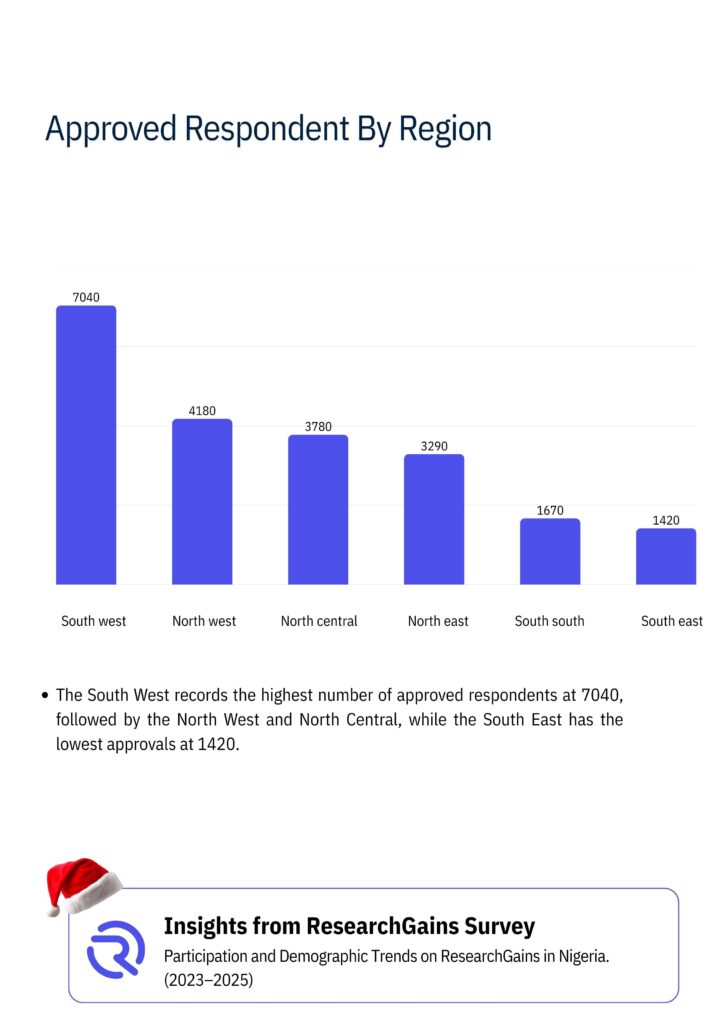
Regional distribution further emphasizes uneven engagement across the country. The South West records the highest number of approved respondents at 7040. This is followed by the North West and North Central regions. In contrast, the South East has the lowest number of approved respondents at 1420. These differences may reflect variations in digital access, awareness, and outreach effectiveness, reinforcing the importance of region specific engagement efforts.
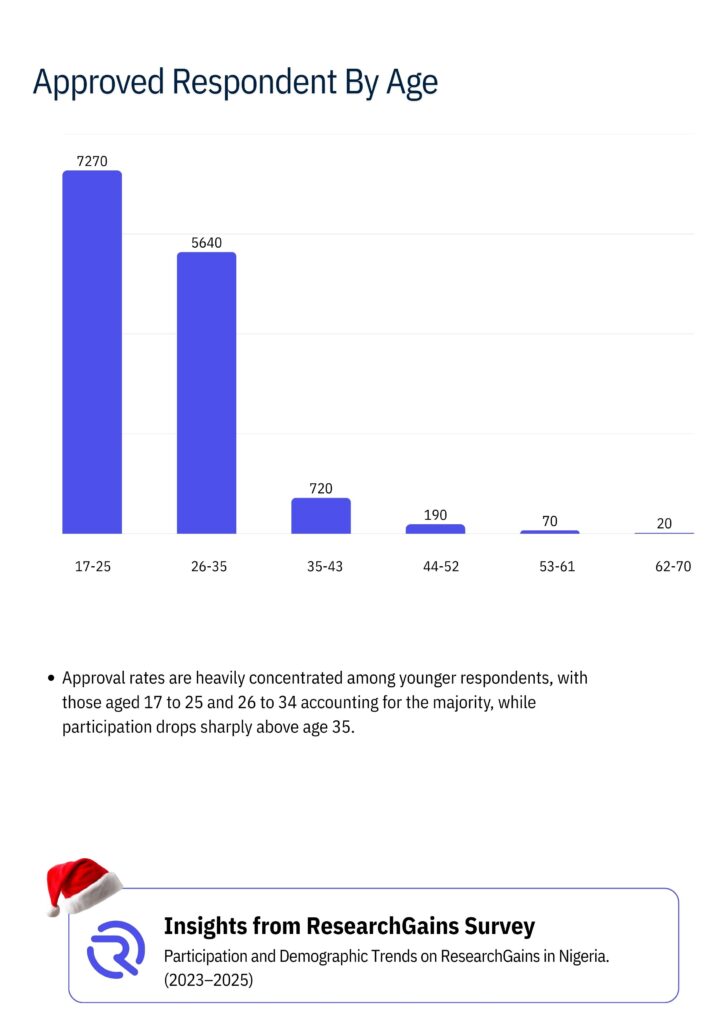
Age distribution patterns show that approvals are heavily concentrated among younger respondents. Individuals aged 17 to 25 and 26 to 34 make up the majority of approved participants. Participation drops sharply among respondents above age 35. This trend suggests that younger demographics remain more active on digital research platforms, while older age groups may face barriers related to technology use, awareness, or perceived relevance.
Overall, the yearly insights from ResearchGains point to strong growth in participation and researcher adoption between 2023 and 2025. At the same time, they reveal clear gaps across gender, region, and age. As the platform continues to expand, addressing these disparities will be critical to improving data quality and ensuring that insights truly reflect the diversity of society. The next phase of growth for ResearchGains lies not just in higher numbers, but in broader, more inclusive participation across all segments.