In Nigeria, education is often described as the bedrock of development. Yet every year, conversations about its quality, accessibility, and fairness continue to reveal major gaps in the system. Issues such as exam malpractice, poor funding, and confusing policy decisions keep raising public frustration.
At ResearchGains, we believe meaningful dialogue should rely on data. For this reason, we asked Nigerians with firsthand experience to share their views on the education system. Their responses reveal a mix of frustration and hope. Nigerians understand the value of education, but they still struggle with its structural problems.
This post breaks down the survey results. It explains what the numbers show, why they matter, and what they could mean for the future of education in Nigeria.
Education Levels of Respondents: Who’s Talking?
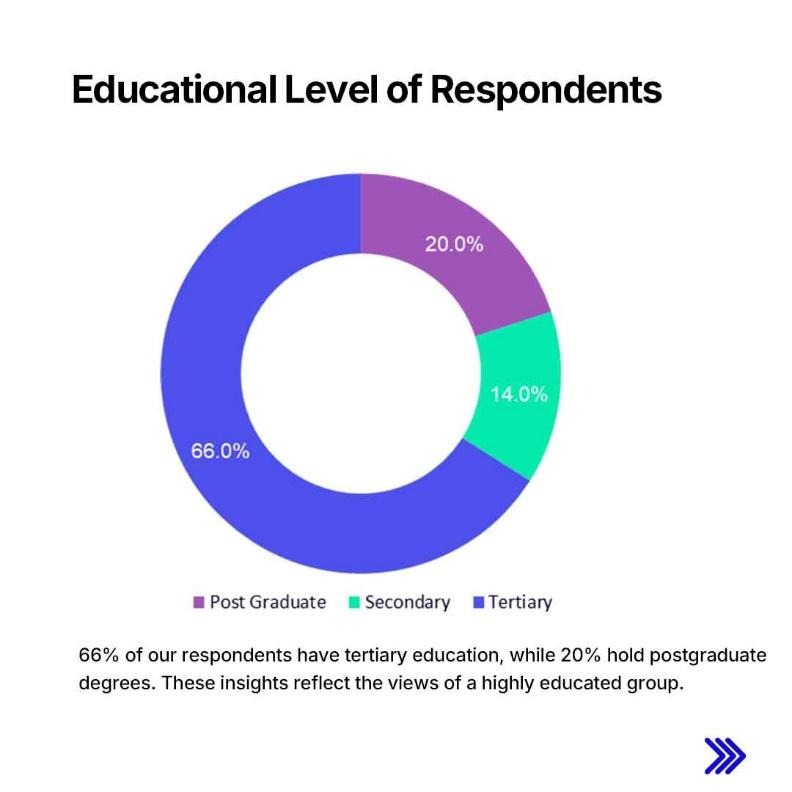
A significant 66% of respondents have attained tertiary education, with an additional 20% holding postgraduate degrees. This demographic composition highlights that the voices in this conversation are largely educated individuals who have journeyed through the Nigerian academic system. Their perspectives provide valuable insider critiques, based not only on opinion but also on lived experience.
This context adds credibility to the survey, making it less speculative and more informed. If anything, it strengthens the argument that many of Nigeria’s educational problems are not due to public ignorance but rather a lack of responsive governance and systemic willpower.
Rating the Nigerian Education System: A Reality Check
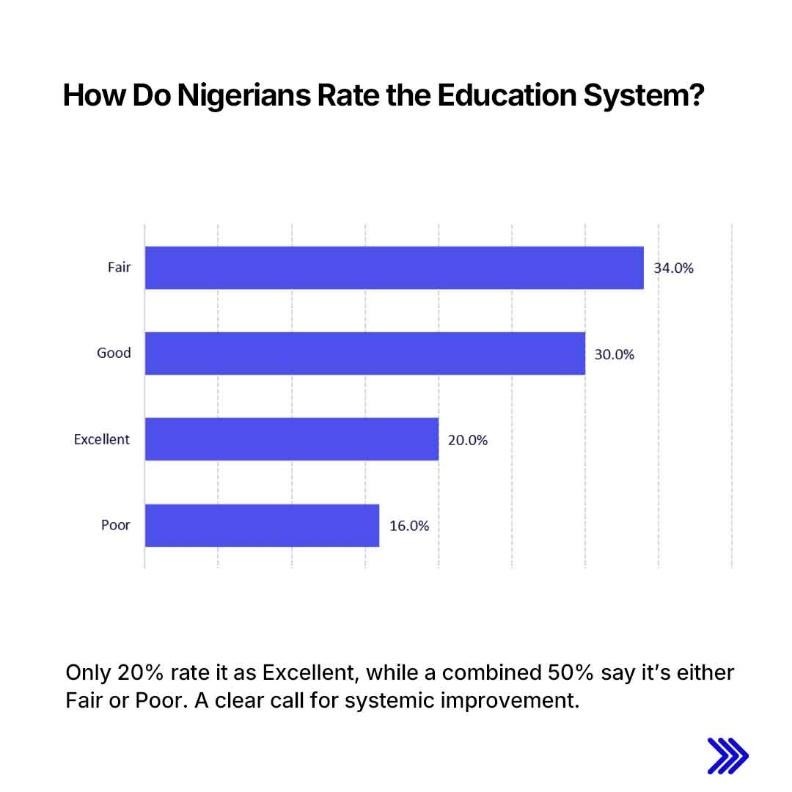
Only 20% of respondents rate Nigeria’s education system as excellent. In contrast, 50% collectively describe it as either Fair or Poor. This is alarming.
It reflects not only dissatisfaction but also a demand for urgent intervention. With such low confidence ratings, it is clear that people no longer see education as a guaranteed path to personal or national advancement. The data suggests a public that is increasingly disillusioned with the status quo, where education is more about surviving than thriving.
The UTME/WAEC Controversy: Public Trust on Thin Ice
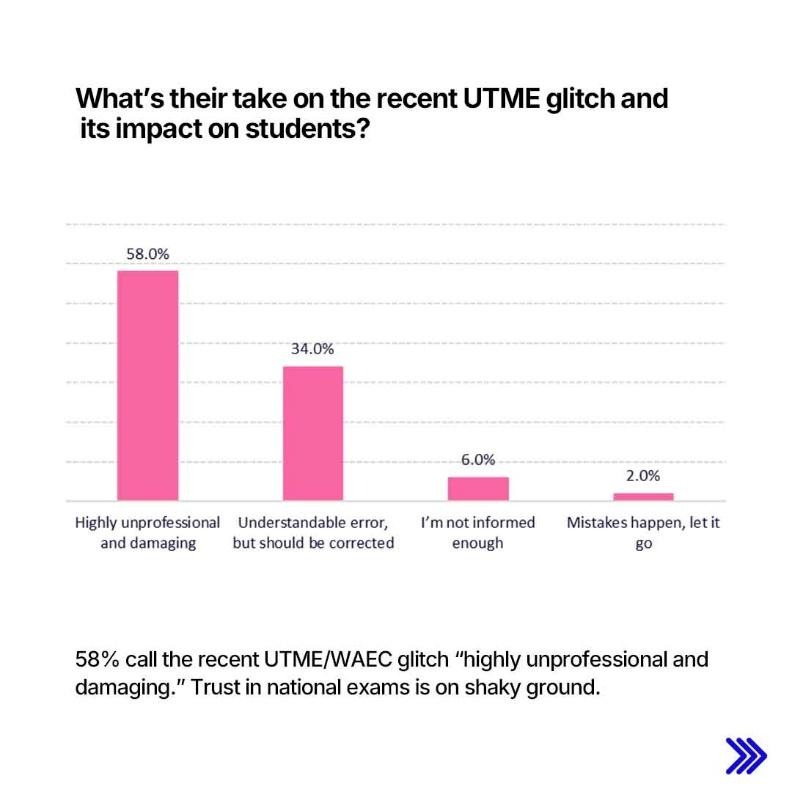
A staggering 58% of respondents called the recent UTME/WAEC glitch “highly unprofessional and damaging.” This shows how a single administrative failure can shake the trust of the public in national examinations.
In a system already fraught with credibility issues, technical errors such as this are more than just minor inconveniences; they are symbolic of broader inefficiencies. The reaction of respondents highlights the emotional and psychological weight placed on these exams, which often determine students’ futures. When these systems fail, they do not just waste time; they crush dreams.
Remark or Retake? The Public Opinion
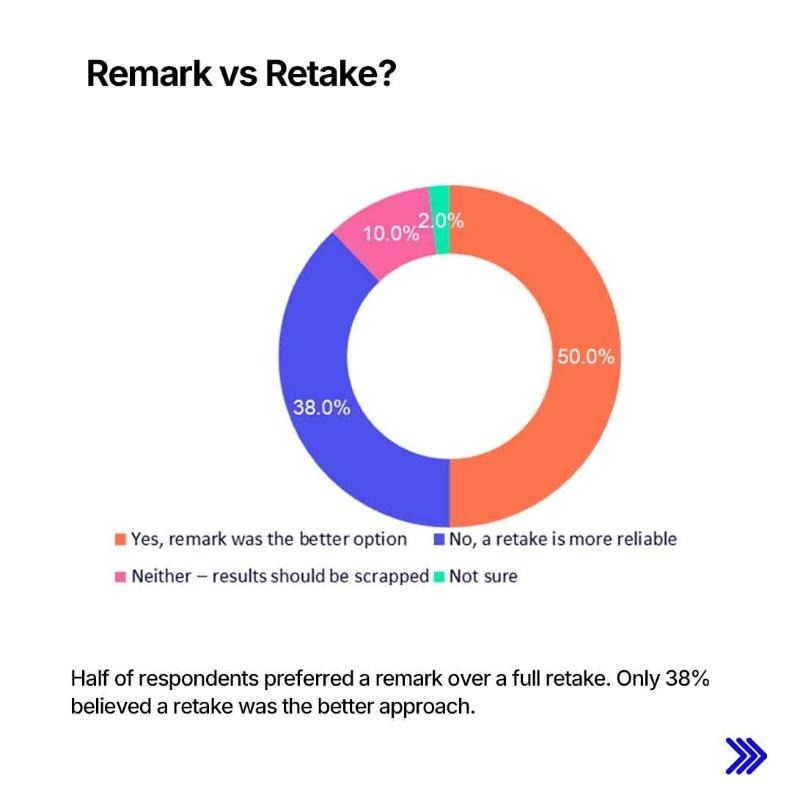
When asked what JAMB should have done in the wake of the controversy, 50% of respondents favored a remark over a full retake, while only 38% supported a retake.
This tells us that most Nigerians prefer fair correction over punitive blanket solutions. It also reflects a desire for trust-building within exam bodies, where students believe their efforts are respected and not casually dismissed by system errors. It is also a subtle critique: the public wants empathy in education policy, not bureaucracy.
The Root of the Problem: What is Holding Education Back?
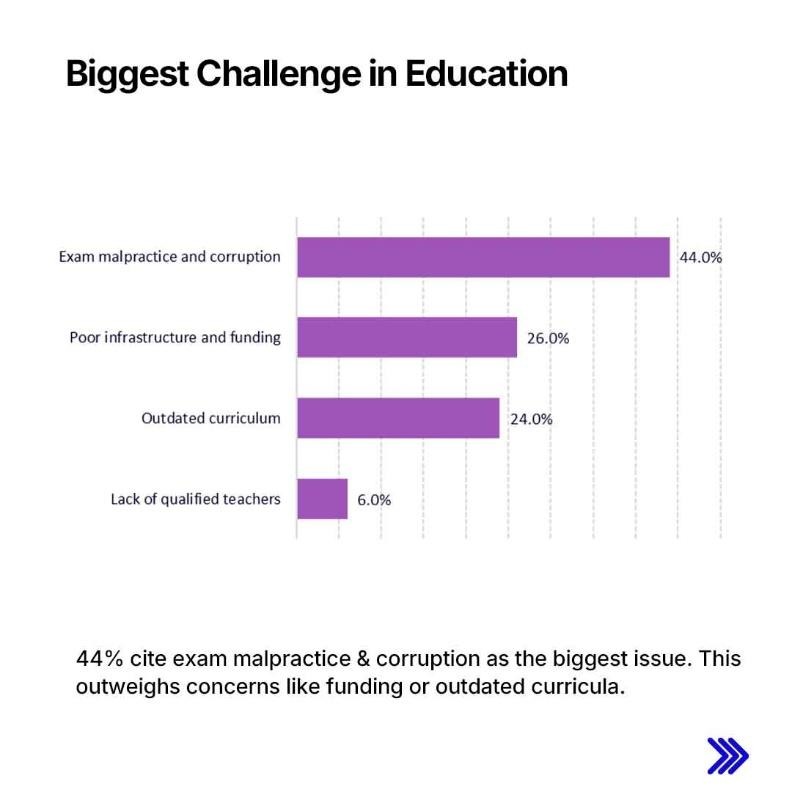
The biggest threat to education, according to respondents, is exam malpractice and corruption, which 44% cited as the most pressing issue, outweighing challenges like inadequate funding, outdated curricula, or poor infrastructure.
This perception aligns with what has been widely reported in the media and among education stakeholders: a system where success is too often influenced by backdoor dealings and academic dishonesty. It also suggests that while improving infrastructure is important, reforming values and governance within the system is even more urgent.
Is Education a Government Priority?
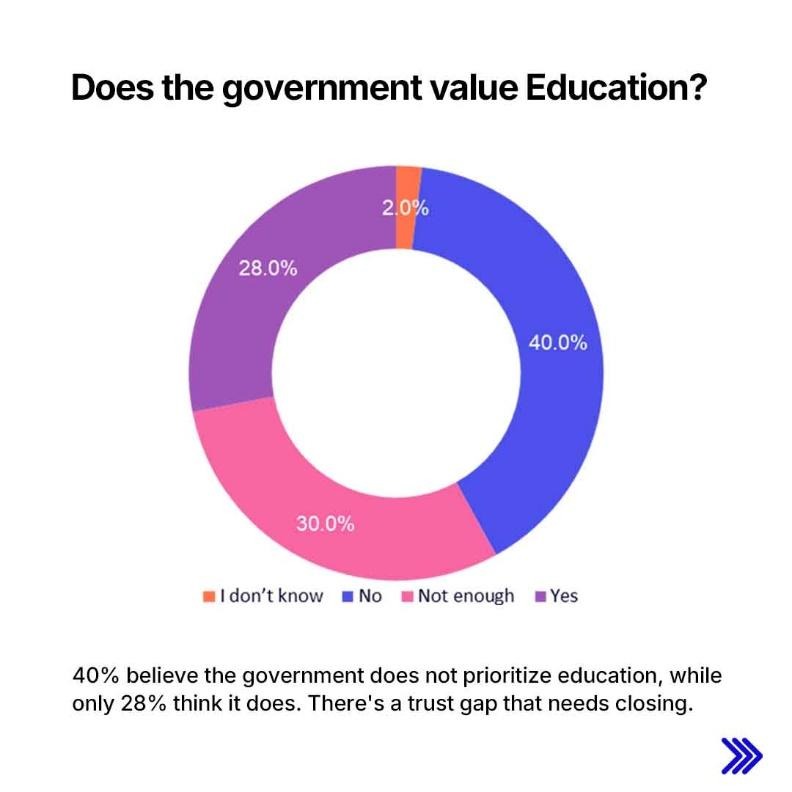
Only 28% believe the government prioritizes education, while 40% say it does not. The rest are either undecided or believe the government gives education some level of attention.
This stark divide reflects a significant trust gap between citizens and policymakers. The belief that education is being neglected by leadership undermines public morale and stifles private initiative. Until this perception is reversed, policy efforts, no matter how well-intentioned, will struggle to gain public buy-in.
Fixing the System: What Will Drive Real Change?
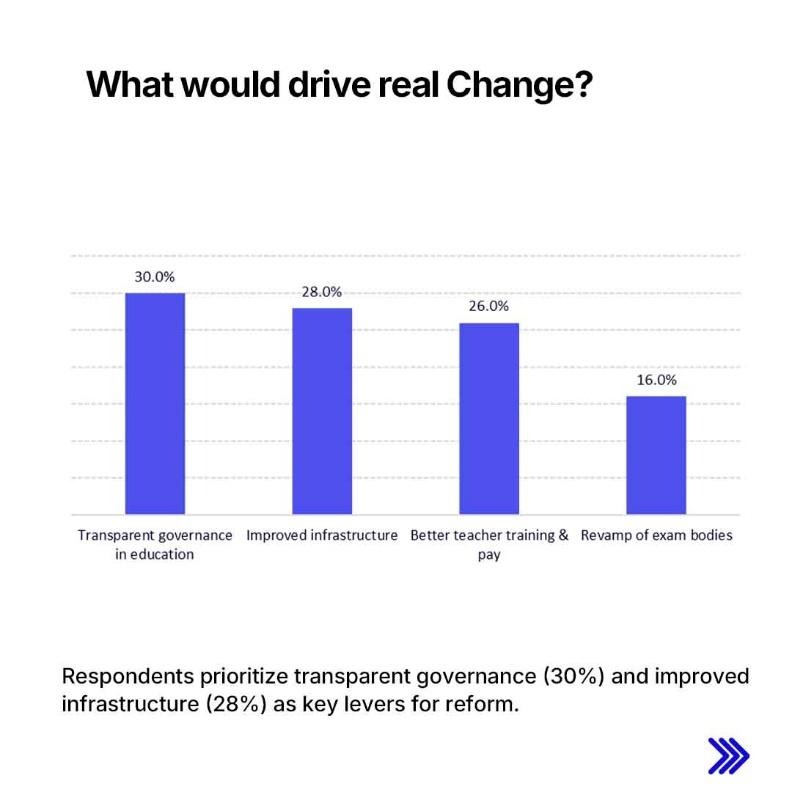
When asked what could truly transform the Nigerian education sector, 30% of respondents prioritized transparent governance, while 28% cited improved infrastructure.
This reinforces a key point: Nigerians want change, but not just in school buildings or exam timetables. They are demanding accountability, transparency, and leadership. It is not enough to throw money at the problem. What is needed is a system that works, and one that Nigerians can believe in.
Conclusion: Education at a Crossroads
The data reveals a populace deeply aware of the challenges facing the Nigerian education system. These are not passive observers; they are participants in the system who are demanding better. From exam credibility to systemic corruption and government neglect, Nigerians are calling out the weak spots and spotlighting opportunities for reform.
But all is not lost.
With education levels among respondents notably high, there exists a large, informed public ready to engage, hold institutions accountable, and push for lasting change. The future of education in Nigeria does not rest solely on policies but on collective awareness, civic action, and a leadership willing to listen.
At ResearchGains, we believe data should guide decisions. This survey is a reflection of public sentiment that is clear, powerful, and urgent. It is a call for bold, multi-dimensional reforms. Let this be more than a conversation; let it be a movement.