
Flooding is no longer an occasional inconvenience in Nigeria; it has become a recurring national crisis. Year after year, floods claim lives, destroy properties, and disrupt livelihoods as communities struggle to cope with increasingly severe and frequent flood events. From the overflowing banks of the Niger River to the waterlogged streets of Lagos, flooding now stands as one of the most visible consequences of climate change and infrastructure neglect in Nigeria.
At ResearchGains, we set out to understand how everyday Nigerians experience flooding, not just in statistics but in real stories and realities. We surveyed citizens across regions to gauge the scope of damage, their level of awareness, their opinions on government response, and the solutions they consider most urgent.
The results are sobering. They show that although awareness of the risks is rising, the structural and institutional response still falls short. In this article, we share key insights, data interpretations, and a call for coordinated action to strengthen Nigeria’s resilience in the face of this growing environmental emergency.
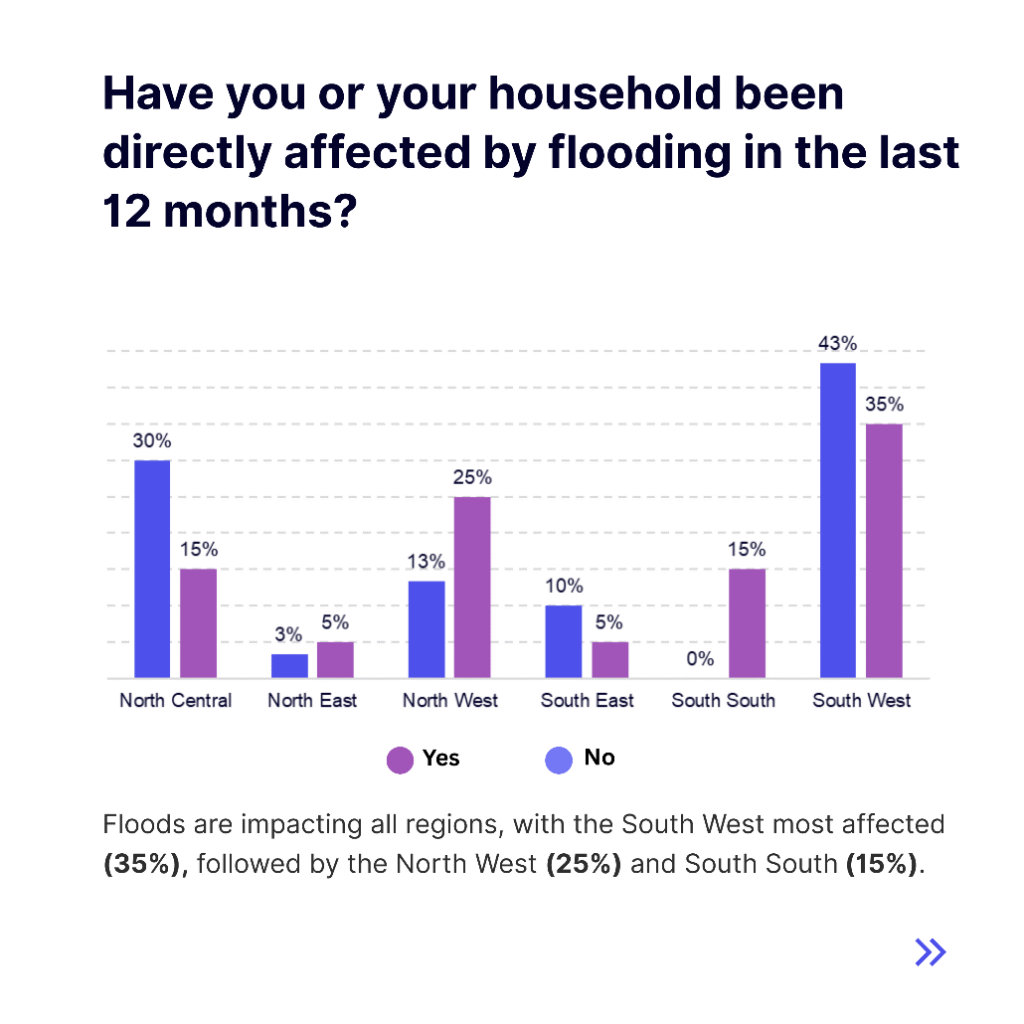
When asked whether they or their households had been directly affected by flooding in the last 12 months, 35% of respondents in the Southwest said yes. This was followed by 25% in the Northwest and 15% in the South-South.
These numbers suggest that flooding is not isolated to coastal or lowland areas as often assumed; it is now a nationwide concern. That the Southwest leads in self-reported impact may be linked to high population density, poor drainage, and unregulated construction in urban centers like Lagos and Ibadan. The widespread nature of these experiences is a clear signal: no region is truly safe without deliberate planning and adaptation.
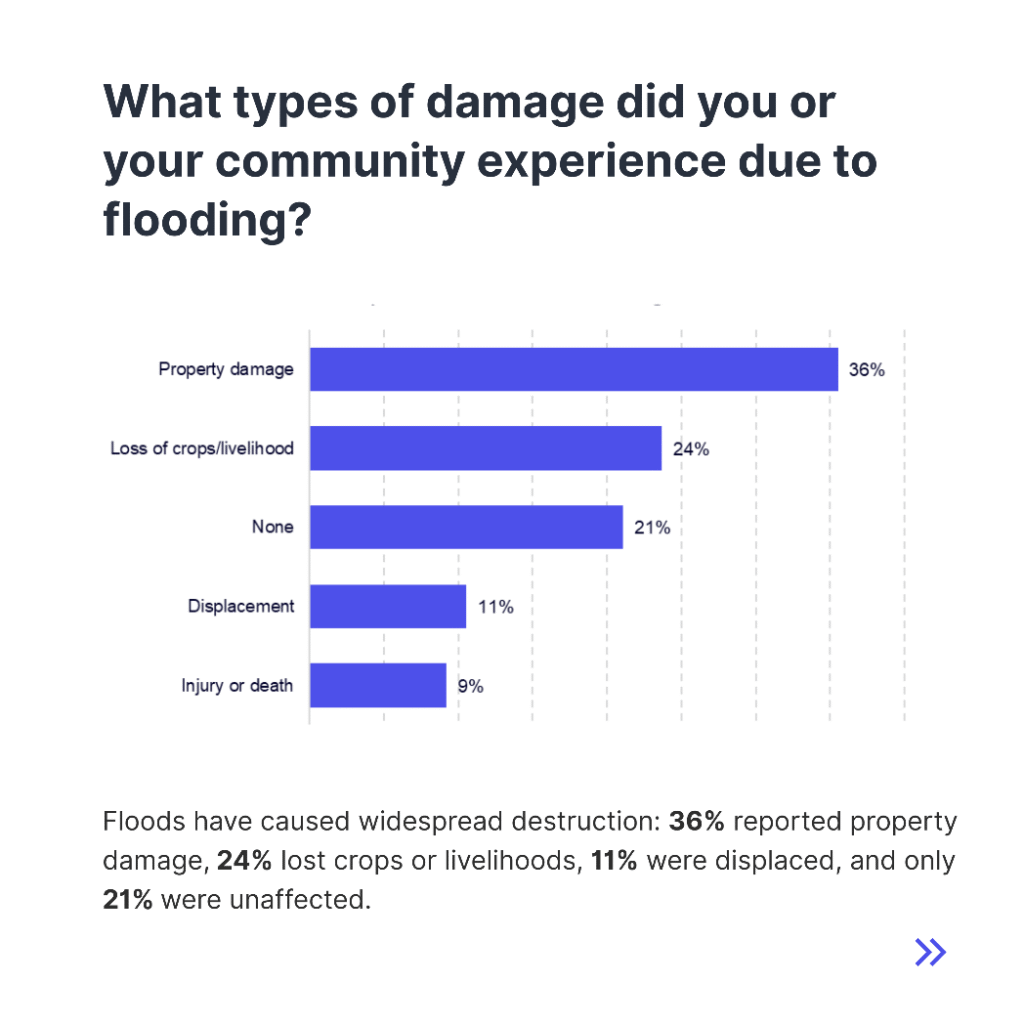
The data reveals the real and multidimensional costs of flooding:
This confirms what many Nigerians already know: floods are not just about water; they destroy homes, devastate farmlands, push people into poverty, and displace entire families. For a country where many people live paycheck-to-paycheck and depend on informal economies, the aftermath of floods can be catastrophic. Recovery is often slow or nonexistent, especially for rural and low-income communities.
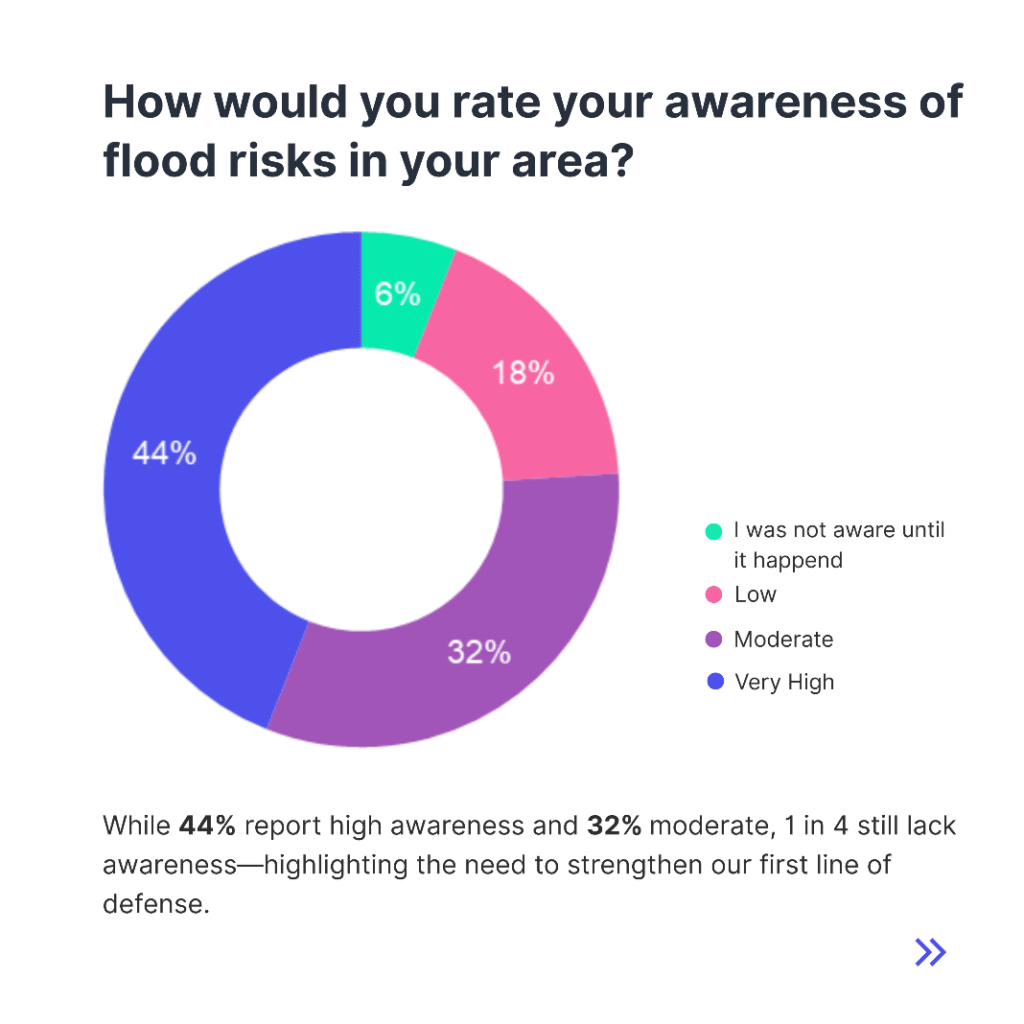
Flood awareness is a critical factor in reducing harm, and the survey shows promising results:
While a majority of respondents feel well-informed, a quarter of Nigerians still live with little or no knowledge of flood risks. This is especially dangerous, as unawareness can lead to lack of preparation or failure to evacuate in time. Expanding public education campaigns, especially in rural and semi-urban areas, could dramatically reduce loss of life and property.
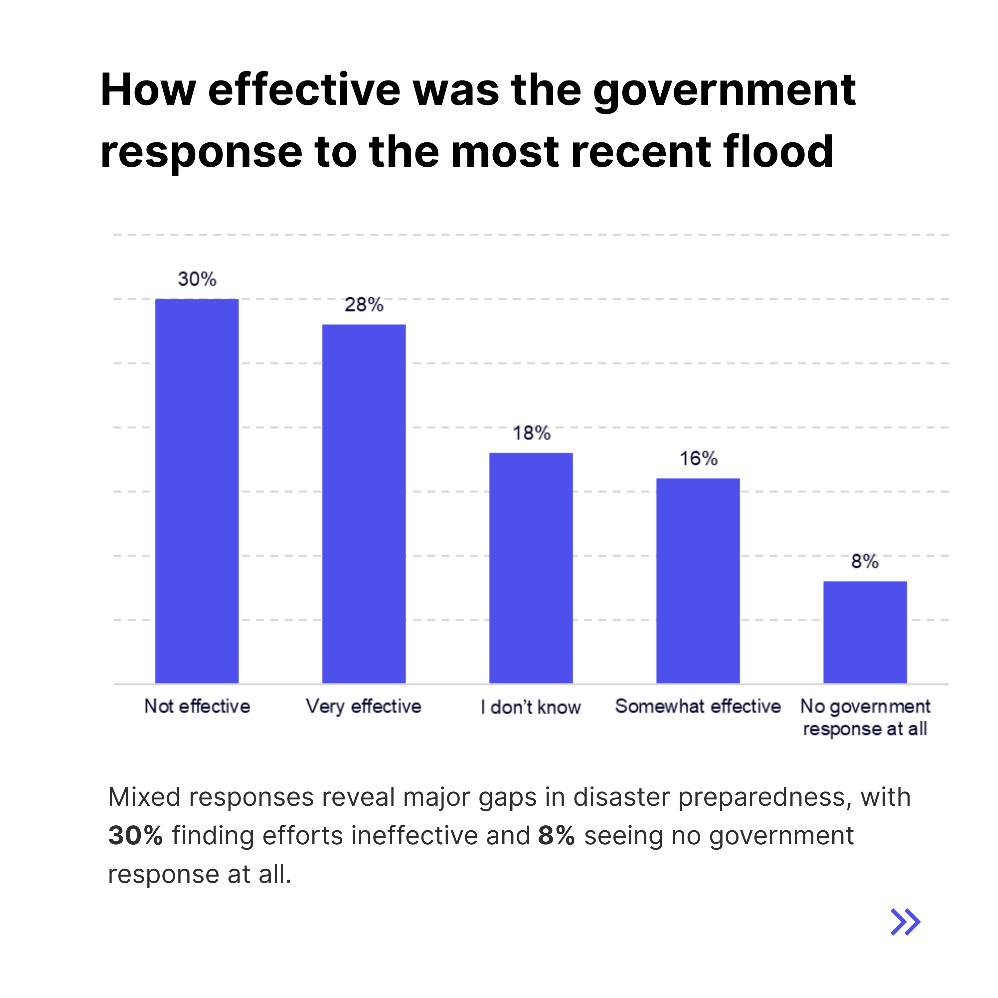
When asked to evaluate the government’s response to the most recent flood in their area:
These mixed results reflect a troubling inconsistency in how disaster response is implemented across the country. Some areas receive aid and evacuation services, while others are left to fend for themselves. The absence of a coordinated national flood response strategy is evident, and Nigerians are noticing.
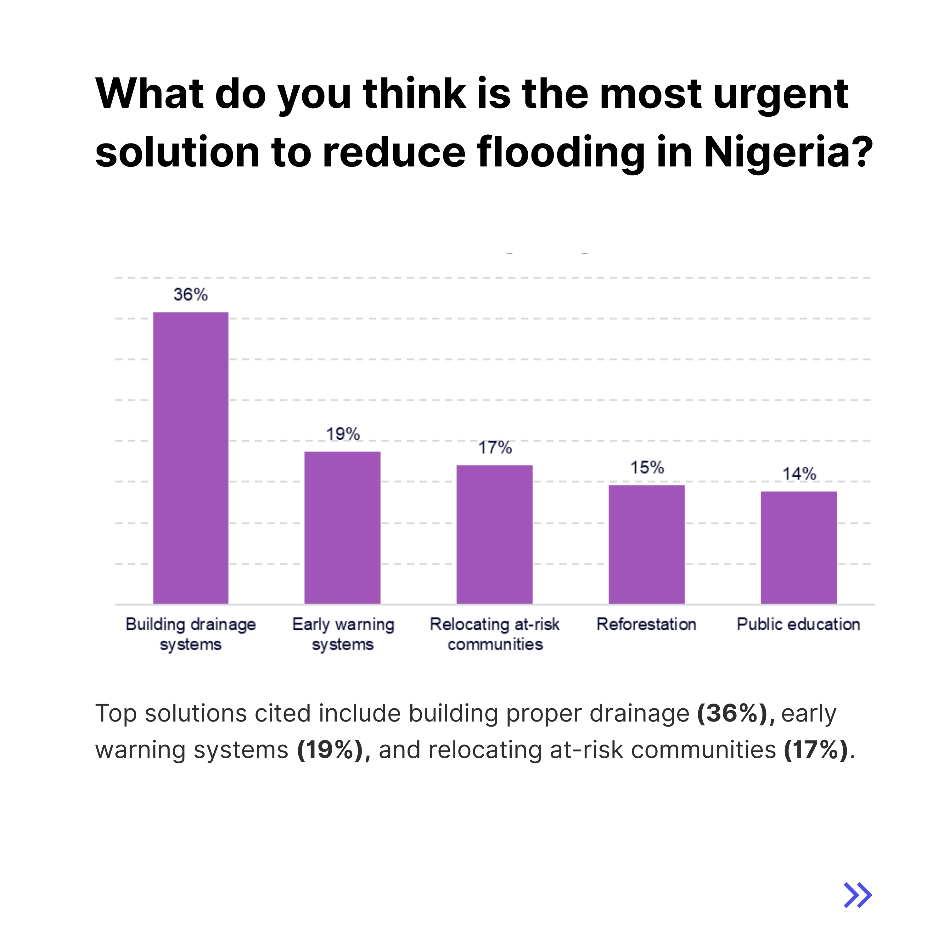
When asked what the most urgent solution should be to reduce flooding in Nigeria, respondents were clear:
The call for improved drainage highlights the everyday reality: poorly maintained or non-existent stormwater systems are a primary cause of urban flooding. Meanwhile, the desire for early warning systems and strategic relocation shows that people are ready to adapt if supported. These are not abstract policy demands; they are practical, actionable needs voiced by those directly affected.
This data tells a powerful story: flooding is real, destructive, and getting worse, yet the national response remains fragmented and reactive. From Lagos to Sokoto, Nigerians are bearing the burden of poor infrastructure, insufficient planning, and a lack of coordinated leadership.
But the numbers also reveal something hopeful: people are paying attention. Awareness is growing. Communities are demanding better. And there is a collective understanding of what needs to be done: better drainage, proactive risk communication, and climate-resilient development.
At ResearchGains, we believe in the power of data to drive action. We will continue to ask the right questions and amplify the voices of ordinary Nigerians, because their lived experiences are the starting point for real change.
Flooding is not just a rainy season issue; it’s a national development emergency.
Demand better infrastructure from your local leaders
Educate your community about flood risks
Support climate-resilient projects and solutions
Join the conversation and hold public institutions accountable