Introduction
Public conversations around LGBTQ topics remain complex and often sensitive within the Nigerian social space. These discussions are shaped by long standing cultural values, strong religious influence, media exposure, and evolving global narratives. Over the past decade, digital platforms have increased access to information and have also intensified debates around identity, rights, and social norms. As a data driven research platform, ResearchGains set out to understand how Nigerians perceive LGBTQ related issues, how familiar they are with the term, and what emotions and opinions these topics evoke.
This survey was designed to move beyond assumptions and provide measurable insights into public awareness and attitudes. Rather than focusing on advocacy or opposition, the goal was to capture how people encounter the topic, what shapes their views, and what they believe should be prioritized by policymakers. Understanding these perspectives is important for researchers, educators, media practitioners, and institutions that work within Nigeria’s social and policy environment.
The findings presented in this report reflect responses from participants across different backgrounds. They offer a snapshot of awareness levels, emotional responses, and prevailing social influences. More importantly, they highlight areas where information gaps, uncertainty, and strong opinions coexist. Additional context on how ResearchGains conducts social perception studies can be found on the ResearchGains platform at https://researchgains.com.
Awareness and Sources of Information
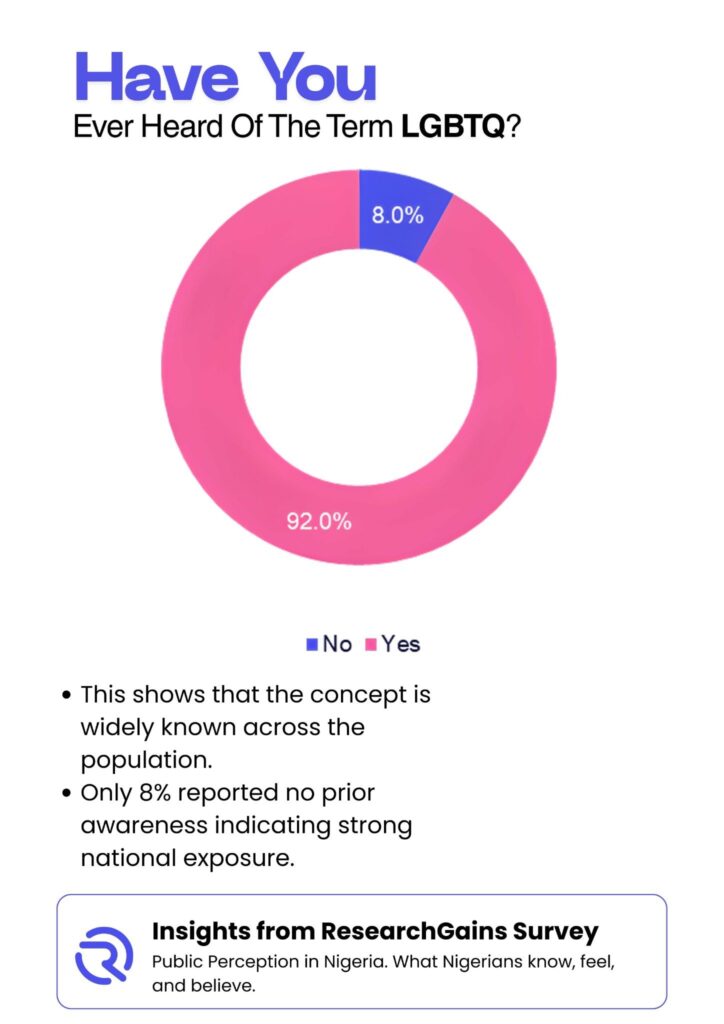
The survey shows that awareness of the term LGBTQ is very high among respondents. A large majority, representing 92%, reported that they had heard the term before. Only 8% indicated no prior awareness. This result suggests that LGBTQ is no longer an unfamiliar concept within the Nigerian public space, at least at the level of basic recognition.
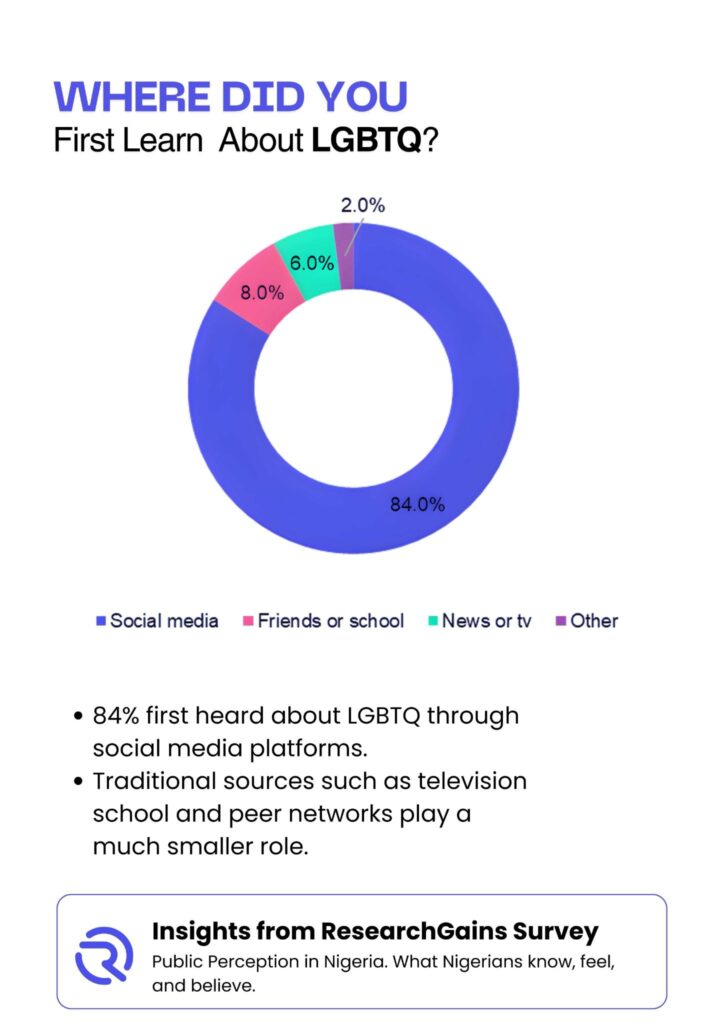
When respondents were asked where they first heard about LGBTQ, social media emerged as the dominant source. About 84% cited platforms such as Twitter, Instagram, Facebook, and similar channels as their first point of exposure. Friends or school accounted for 8%, while traditional media such as news or television accounted for 6%. Other sources made up just 2%. These results point clearly to the role of digital media in shaping early awareness and framing conversations around LGBTQ topics in Nigeria.
Level of Understanding
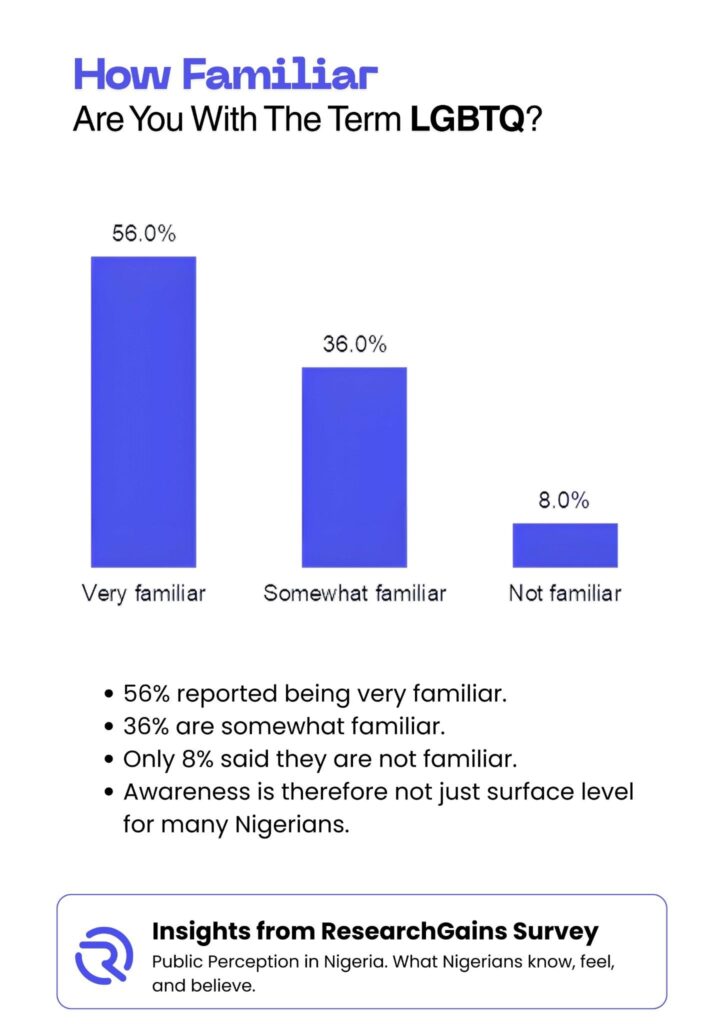
Beyond awareness, the survey explored how well respondents understood what LGBTQ means. Over half of the respondents, 56%, described themselves as very familiar with the meaning of the term. Another 36% reported being somewhat familiar. Only 8% stated that they were not familiar with its meaning. This distribution suggests that exposure often comes with a reasonable level of understanding, though depth and accuracy of knowledge may still vary across individuals.
Openness of Discussion
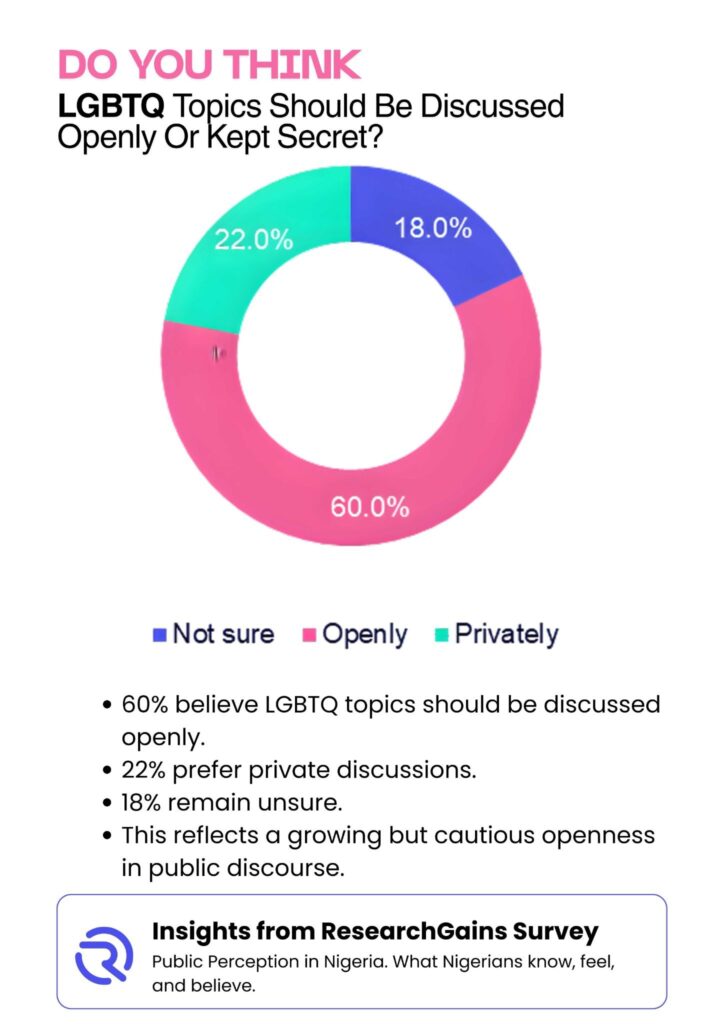
Opinions differed on how LGBTQ topics should be treated in public discourse. A majority of respondents, 60%, believed that these topics should be discussed openly. At the same time, 22% preferred that such discussions remain private. Another 18% expressed uncertainty. These mixed views reflect the tension between increasing visibility and deeply rooted social norms. While openness gained more support overall, a significant portion of the population still expressed reservations or uncertainty.
Emotional Reactions
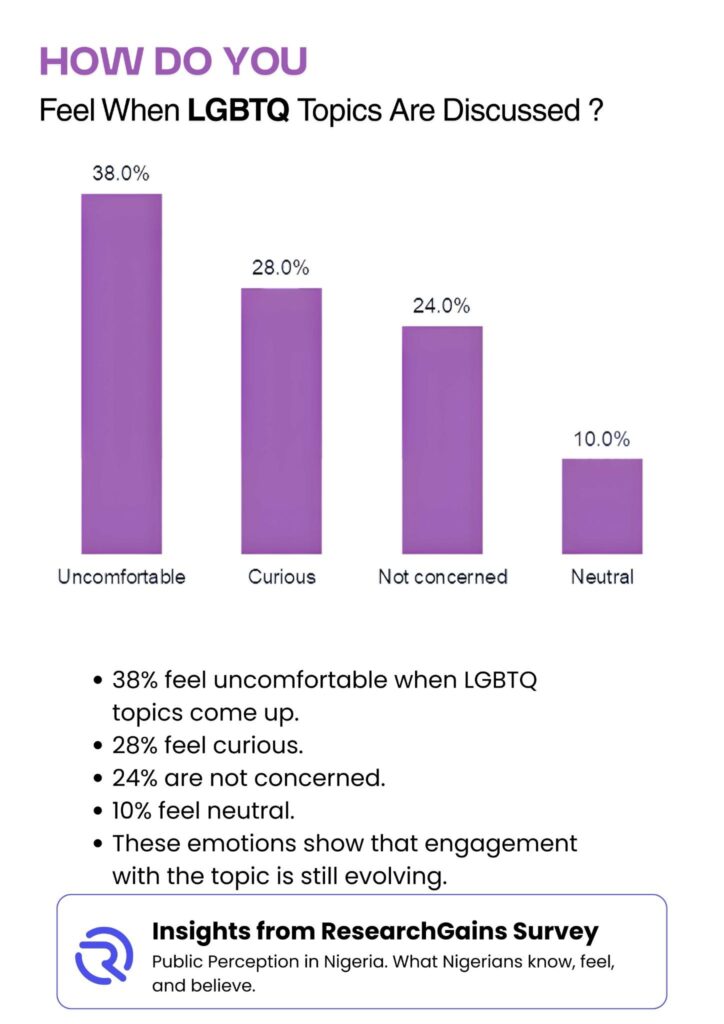
Emotional responses to LGBTQ discussions were also measured. Discomfort was the most commonly reported emotion, expressed by 38% of respondents. Curiosity followed at 28%, while 24% said they felt not concerned. A smaller group, 10 percent, reported feeling neutral. These findings show that emotional reactions vary widely and are not limited to a single dominant feeling. Discomfort and curiosity together suggest that many Nigerians continue to process and question the topic rather than fully accept or reject it.
Influences on Public Perception
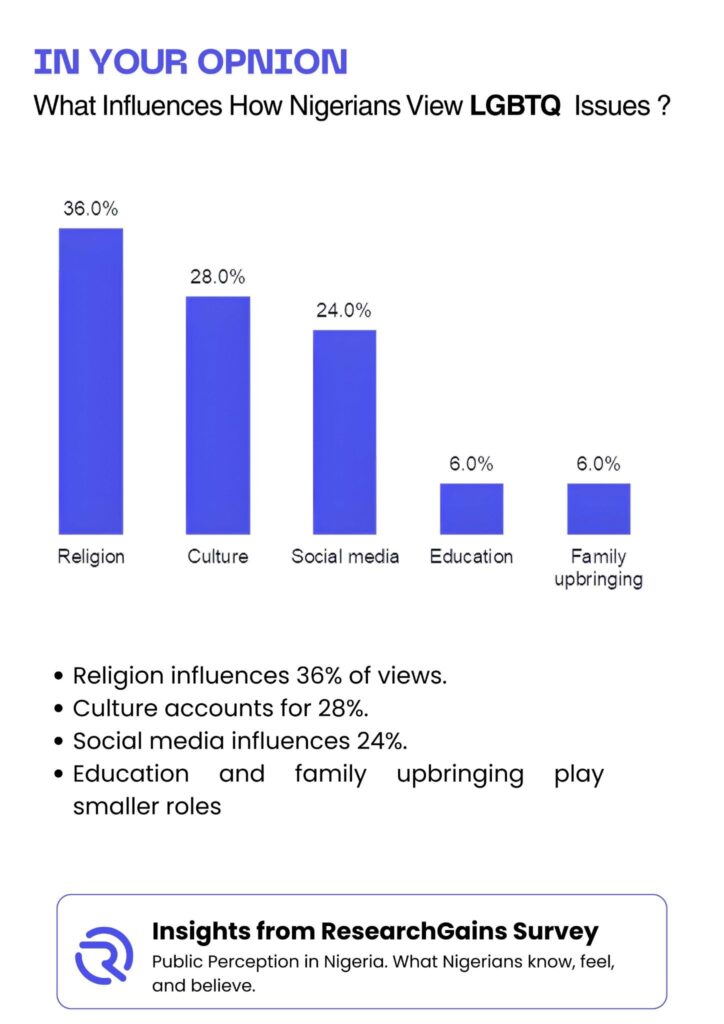
Respondents identified several factors that shape how Nigerians view LGBTQ issues. Religion ranked highest at 36%, followed by culture at 28%. Social media accounted for 24%, while education and family upbringing each accounted for 6%. This hierarchy highlights the strong influence of belief systems and cultural values, even as digital platforms continue to shape narratives and exposure.
Personal Connections
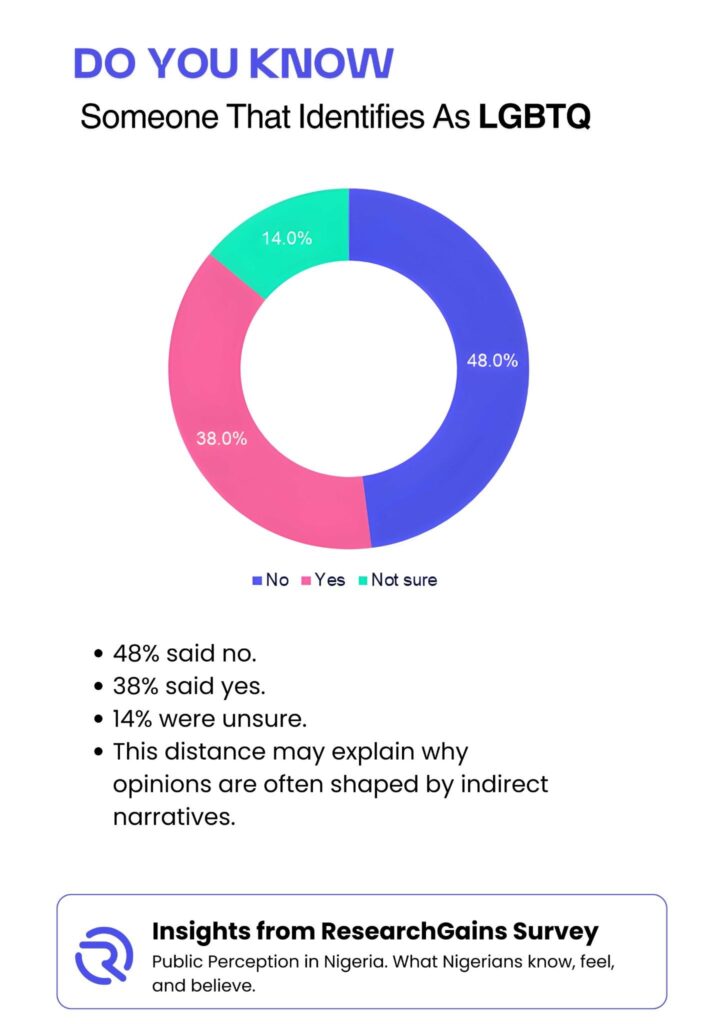
The survey also explored personal proximity to LGBTQ individuals. Nearly half of the respondents, 48%, said they did not personally know someone who identifies as LGBTQ. Meanwhile, 38% said they did, and 14% were not sure. This suggests that for many Nigerians, opinions may be shaped more by indirect information sources rather than direct personal relationships.
Views on Harm and Harassment
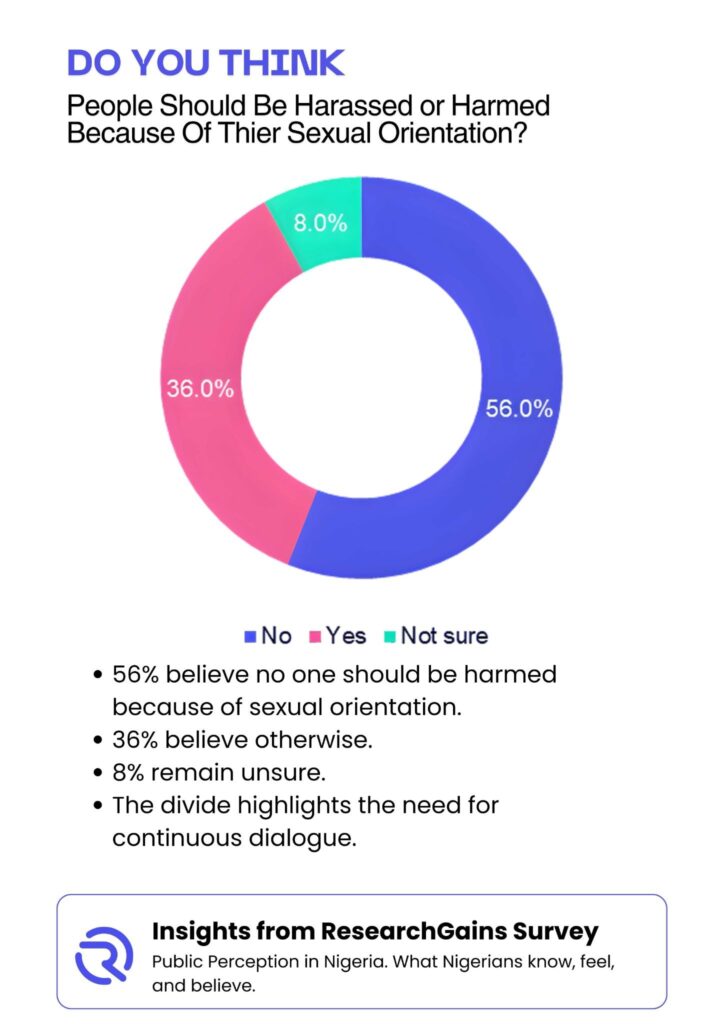
On the question of whether people should be harassed or harmed because of their sexual orientation, a majority of respondents, 56%, said No. However, 36% answered yes, while 8% remained unsure. This result reveals a clear moral divide and underscores the importance of continued dialogue around human dignity, safety, and social responsibility.
Expectations from Government
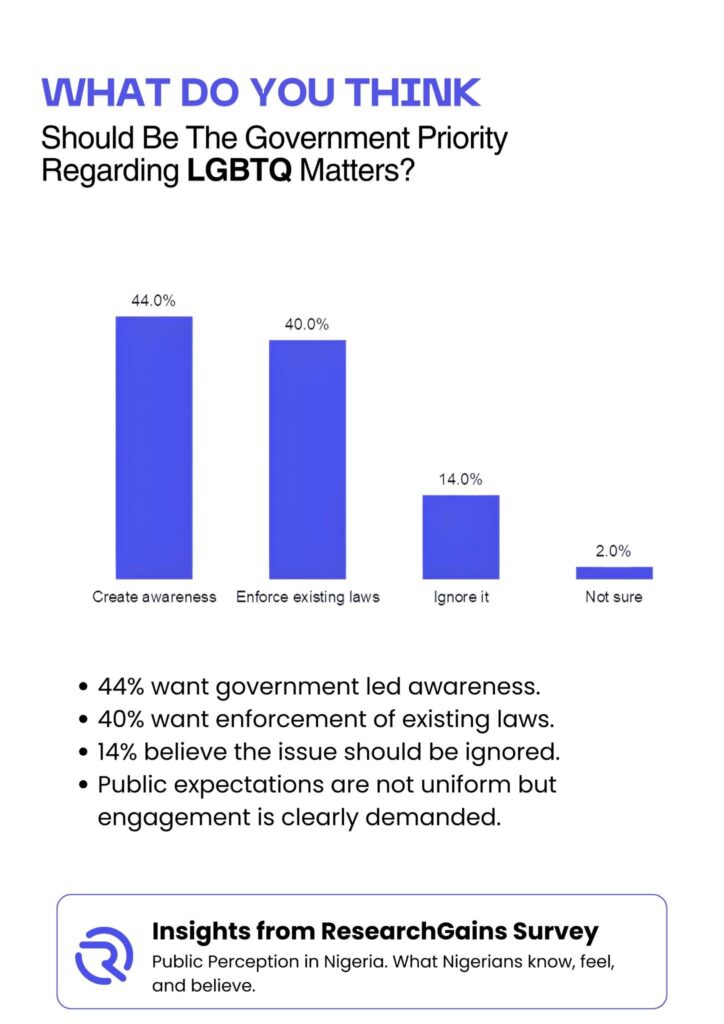
Finally, respondents shared their views on what government priorities should be regarding LGBTQ matters. Creating awareness ranked highest at 44%, followed closely by enforcing existing laws at 40%. A smaller group, 14%, believed the government should ignore the issue, while 2% were unsure. These responses suggest that many Nigerians expect structured engagement, either through public education or legal clarity, rather than complete silence.
Conclusion
Overall, the survey reveals a Nigerian public that is highly aware of LGBTQ terminology, largely informed through social media, and divided in emotional and moral responses. Religion and culture continue to shape perceptions strongly, while openness to discussion shows gradual growth alongside persistent discomfort. The findings highlight the need for balanced, context aware conversations that reflect local realities while acknowledging diverse viewpoints.
ResearchGains remains committed to presenting data that supports informed dialogue and evidence based decision making. More insights from similar perception studies can be accessed through the ResearchGains blog and data reports at https://researchgains.com/blog.