
In Nigeria, going to the hospital should not feel like a gamble. Yet for many people, it still does. Unreliable equipment, poor infrastructure, long travel distances, and unpredictable service often make healthcare fall short of what citizens need and deserve.
At ResearchGains, we wanted to hear directly from the people who face these challenges every day. We asked Nigerians to share their real-life encounters with hospital care, and the feedback we received was clear, honest, and deeply revealing.
This report explains in detail what respondents across the country told us. It offers a snapshot of a healthcare system struggling to do more with limited resources and of citizens who are tired of settling for less.
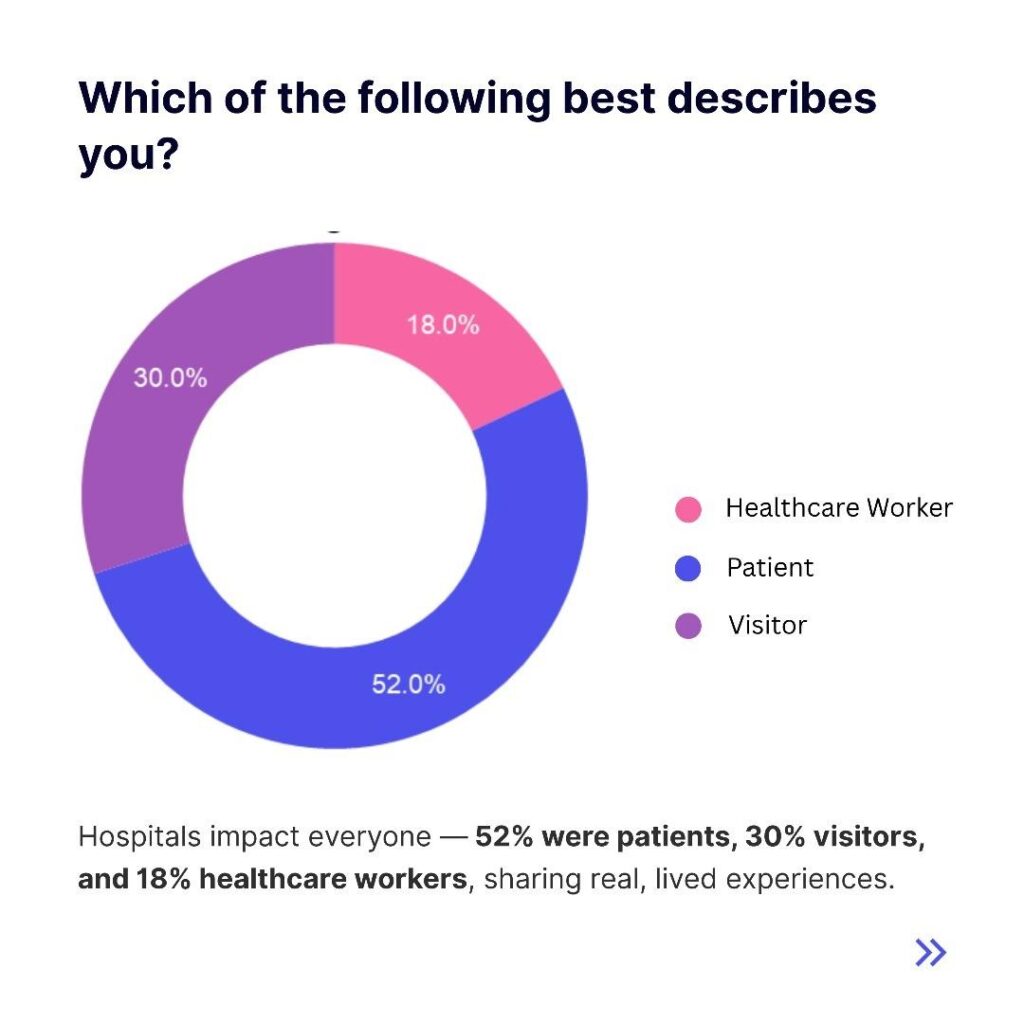
In our survey, over half of the respondents (52%) were patients. 30% were hospital visitors, and 18% were healthcare professionals. These are not distant observers or data points; they are people living through Nigeria’s healthcare reality every day.
By capturing insights from inside and outside the system, we gain a fuller picture: one shaped by those receiving care, those giving it, and those witnessing the gaps in between.
When asked which type of hospital they preferred, 56% of Nigerians chose private hospitals. Just 24% said they preferred public ones, and 16% had no clear preference.
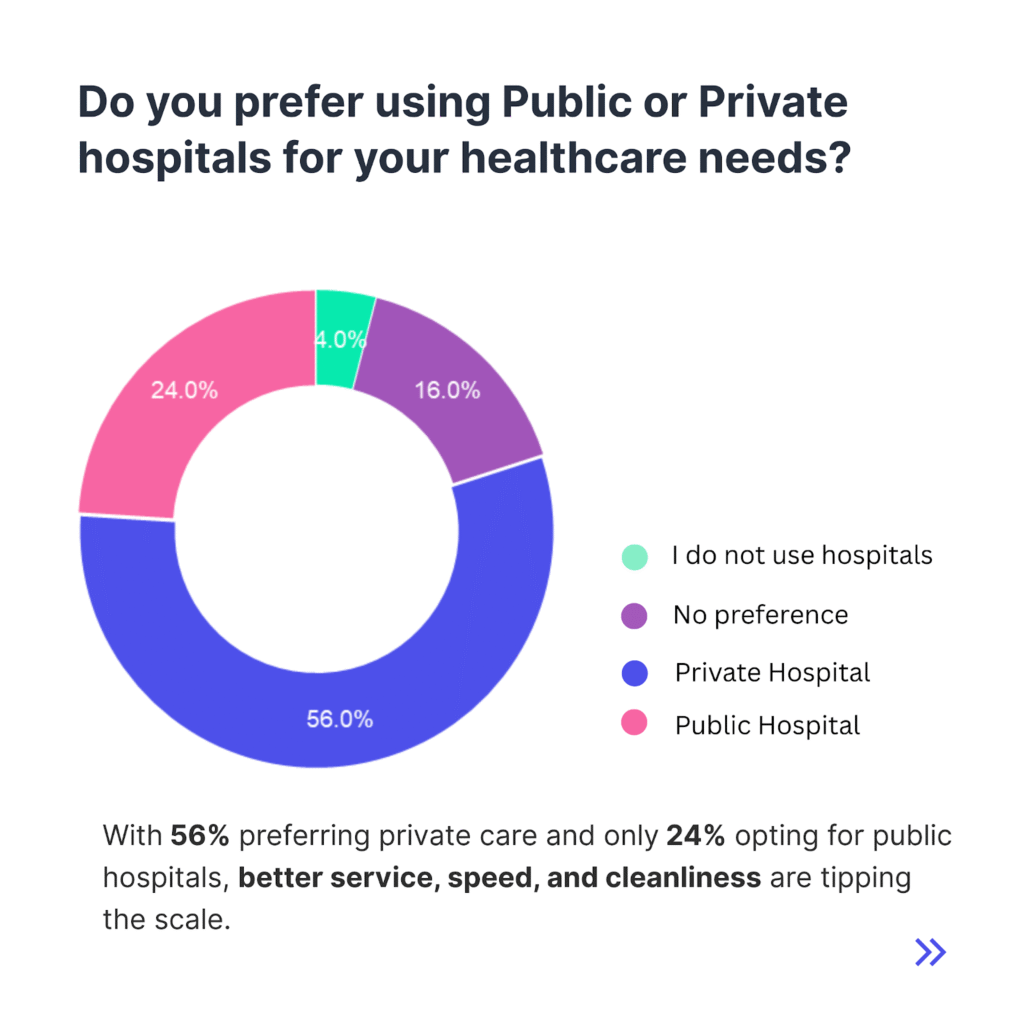
The numbers speak for themselves. While public hospitals are more affordable and widespread, they are often perceived as under-equipped, overcrowded, or slow. For many, choosing private healthcare is less about luxury and more about survival. The message is clear: people want care they can trust, even if it costs more.
We also asked respondents to rate the condition of hospitals in their areas, including buildings, equipment, and sanitation. The most common rating? “Fair” at 46%. Another 28% said “Good,” but only 10% rated it “Excellent.”
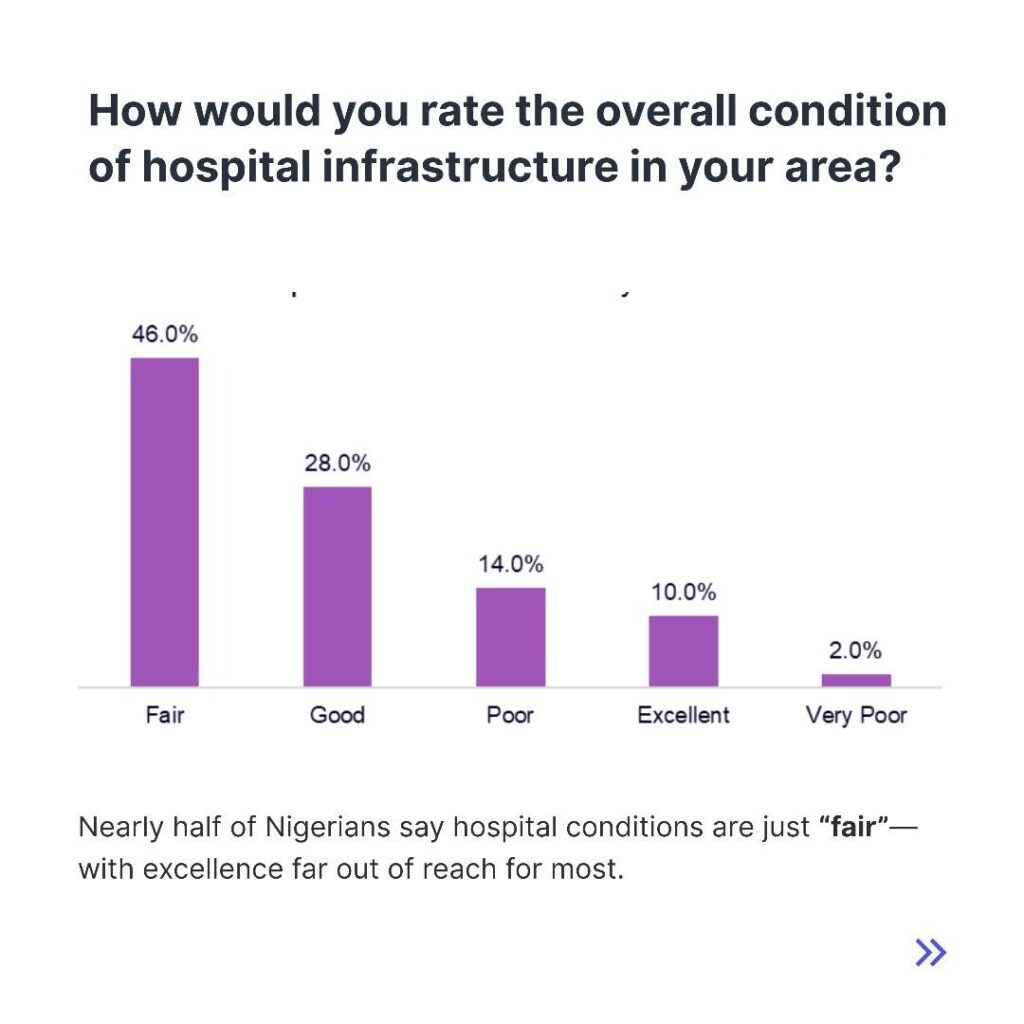
This tells a story of barely-getting-by hospitals. Not in ruins, but not inspiring confidence either. For many patients, it is not the broken walls that bother them; rather, it is what they symbolize: a system that feels neglected, worn out, and under pressure.
One of the clearest findings in the survey was how much physical access still matters.
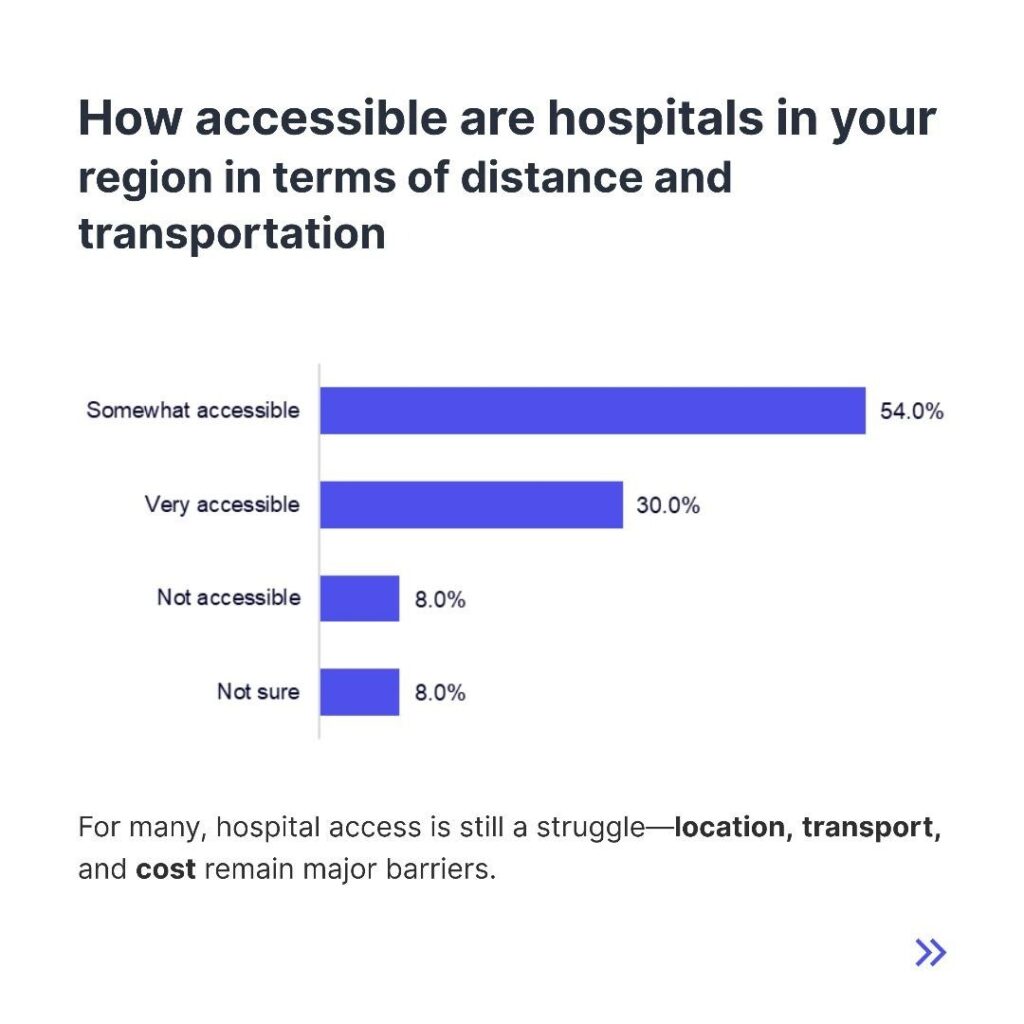
For too many Nigerians, getting to a hospital is not just a question of transport, it is a journey shaped by bad roads, far-off facilities, high costs, and limited options. And for the sick, every extra mile is another risk.
We also asked Nigerians how they feel about the availability and attitude of hospital staff, doctors, nurses, and technicians. Here’s how they responded:
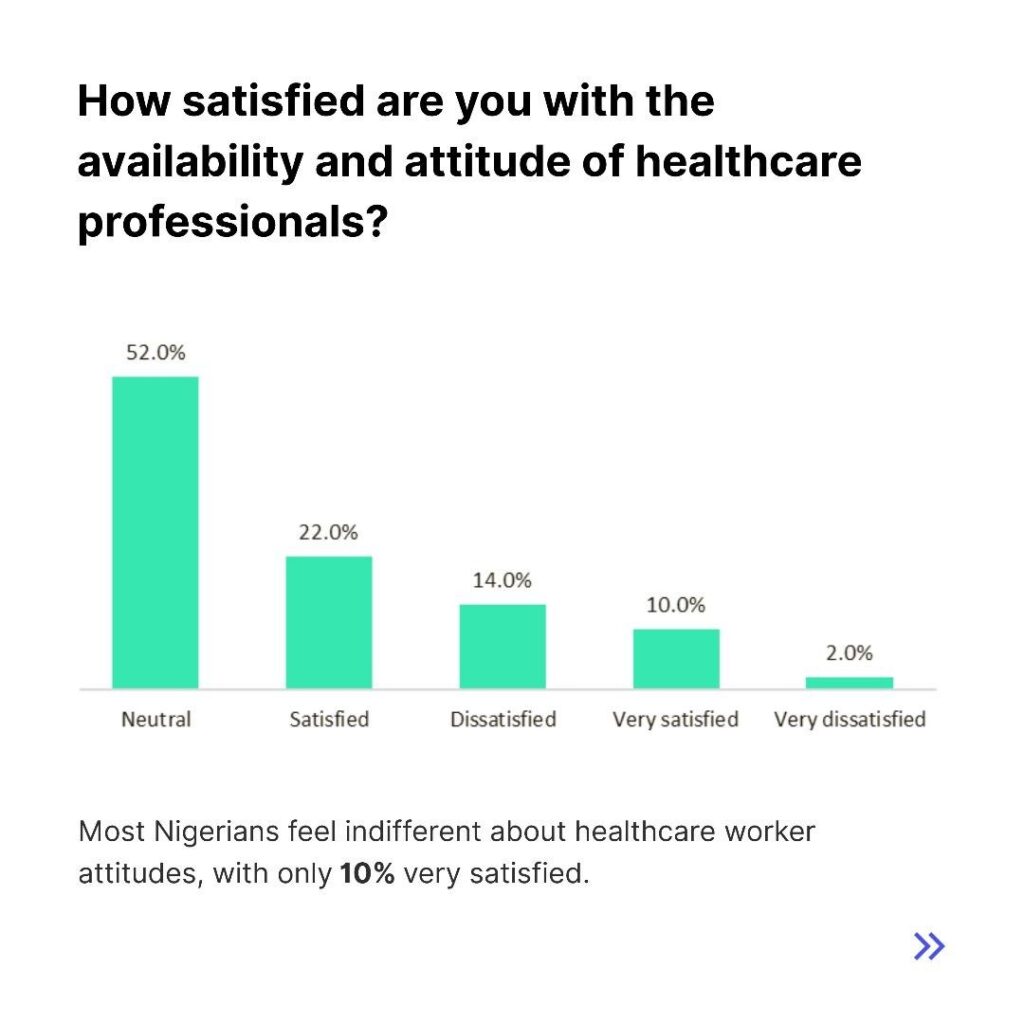
A majority of respondents were not angry, but they were not happy either. This “neutral zone” reflects what many people quietly feel: healthcare workers are trying, but the system around them is not helping. Overworked, under-resourced, and often underpaid, even the most dedicated professionals can only do so much.
Perhaps the most hopeful result from our survey is this: 86% of respondents believe the government should invest more in public hospitals and healthcare staffing. Only 8% said no, and 6% were undecided.
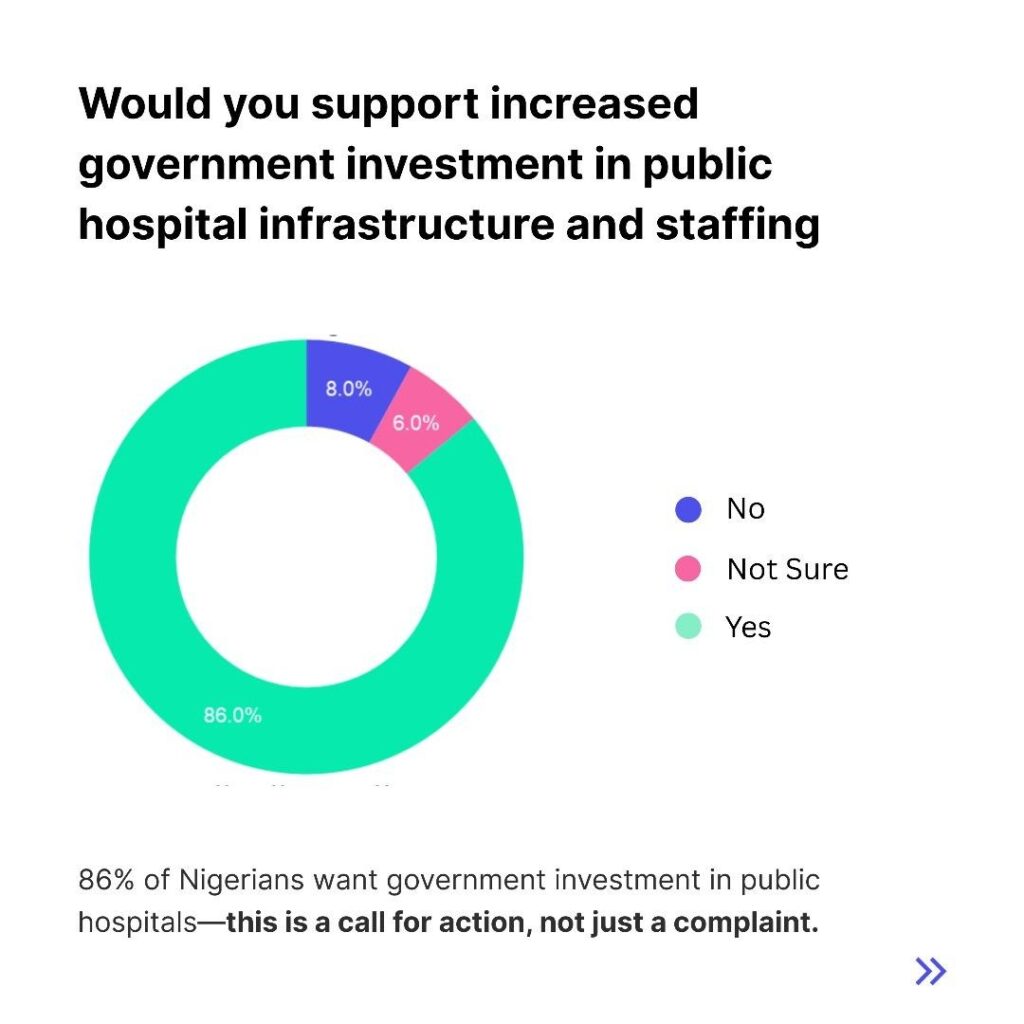
This overwhelming support shows that Nigerians are not passive or cynical; they care, they are paying attention, and they want better. The demand is not just for more hospitals. It is for hospitals that work, are clean, are equipped, are close by, and are staffed with people who care and are empowered to act.
Unfortunately, Nigeria’s healthcare challenges are not just a perception; they are backed by global data:
The situation is as urgent as it is fixable. What is needed is not another review, but a real response.
The results of this survey paint a familiar but still troubling picture: a healthcare system that is stretched thin and often falling short. People are tired of broken beds, missing tools, long waits, and uncertain outcomes. But they have not given up hope.
The call for reform is strong and growing. Nigerians are not just complaining; they are asking to be heard. They want to see hospitals that are safe, accessible, and dependable. They want their healthcare system to match the dignity and determination of the people it is meant to serve.
At ResearchGains, we believe in the power of listening and acting on what we hear. This survey is one step toward something bigger: a movement for healthcare that works.