Introduction
The festive season holds deep emotional meaning for many people across Nigeria. It is often associated with family reunions, shared meals, travel reflection, and renewed hope for the coming year. Beyond the celebrations, the period also reveals important social and economic realities. Rising living costs, security concerns, and evolving work demands continue to shape how individuals experience the holidays.
At ResearchGains, we conducted a series of opinion polls to understand how people are preparing for the festive season, how they are spending their time, how they feel, and what their priorities are for the new year. These insights help move the conversation beyond assumptions and provide a clearer picture of real experiences during this period.
The results present a season shaped by excitement and restraint. While many people look forward to celebrating, others are adjusting expectations due to financial pressure, safety concerns, and professional responsibilities. Together, these findings reflect resilience, careful planning, and cautious optimism.
Readiness for Christmas
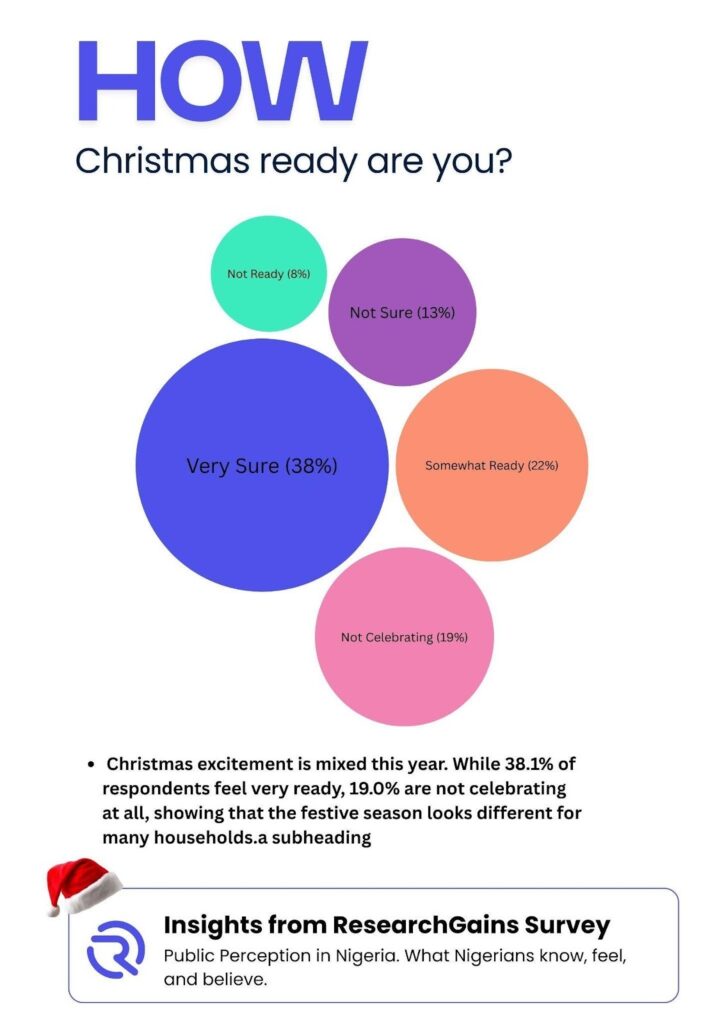
Levels of readiness for Christmas vary widely. While 38.1% say they are very ready and 22.2% feel somewhat ready, 19.0% are not celebrating Christmas at all. Another 12.7% are unsure, and 7.9% say they are not ready. This range highlights how personal circumstances, beliefs, and economic conditions influence festive participation.
Link to dataset: https://www.researchgains.com/research-gains/datasets/889
Festive Spending Patterns
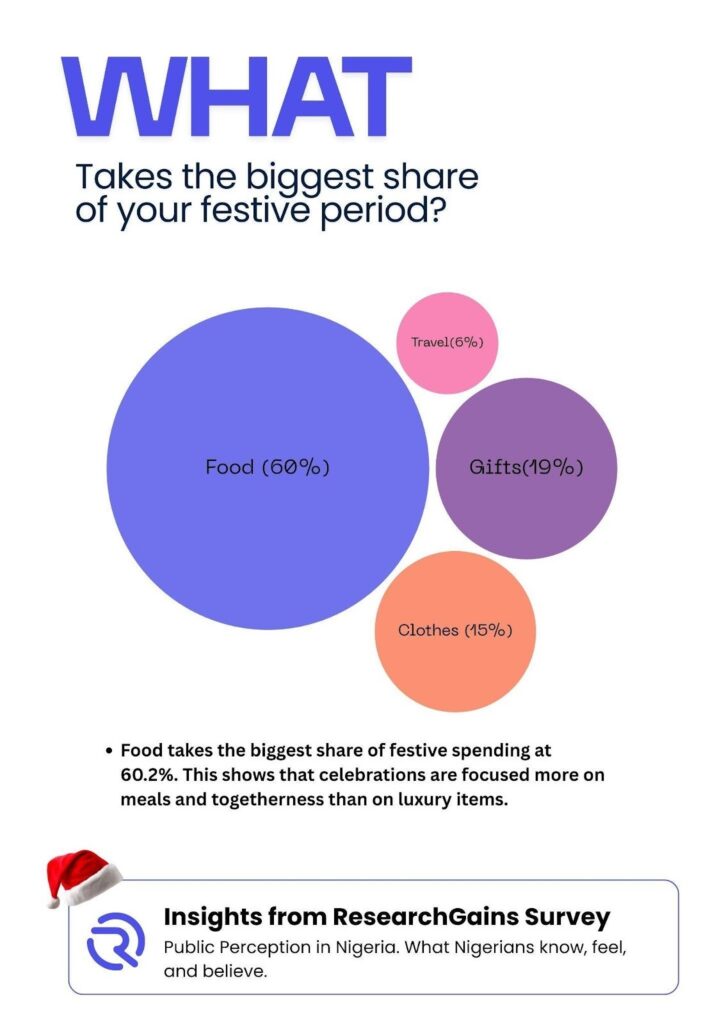
Food dominates festive budgets, with 60.2% of respondents identifying it as their biggest expense. Gifts follow at 19.3%, while clothes account for 14.8%. Travel represents the smallest share at 5.7%. These patterns suggest that people are prioritizing home-based celebrations and shared meals over travel and high-cost purchases.
Travel Decisions and Security Concerns
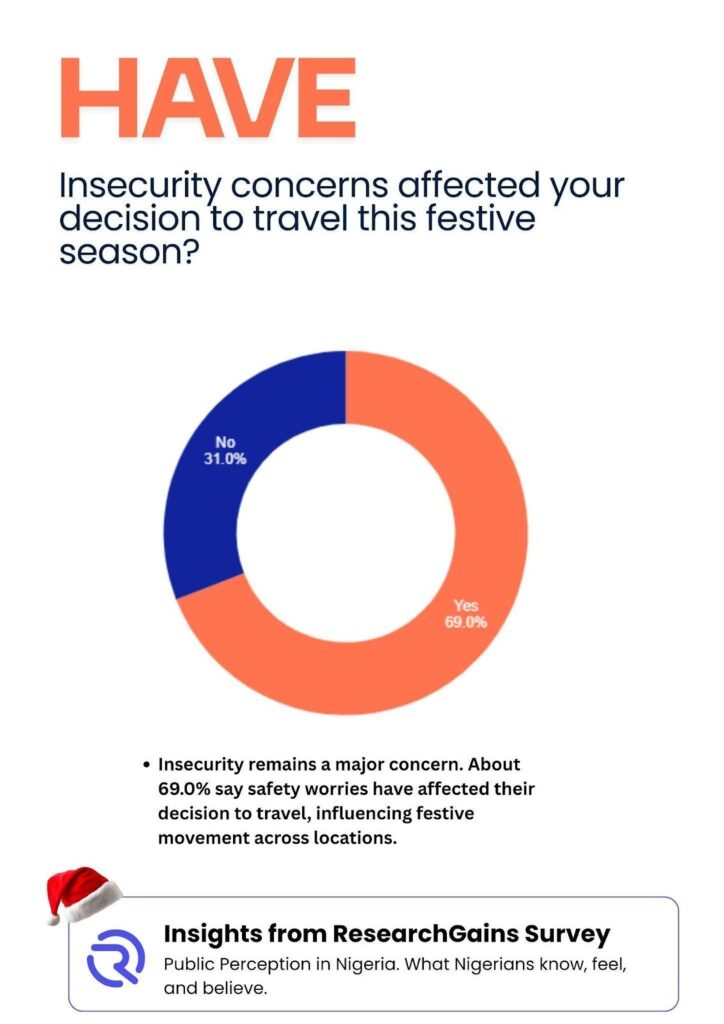
Despite ongoing challenges, 55.8% of respondents plan to travel during the festive season. However, insecurity plays a major role in shaping these decisions. About 69.0% say safety concerns have affected their decision to travel, while 31.0% say insecurity has not influenced their plans. This highlights how security concerns remain a key factor during festive travel.
Work Life During the Festive Break
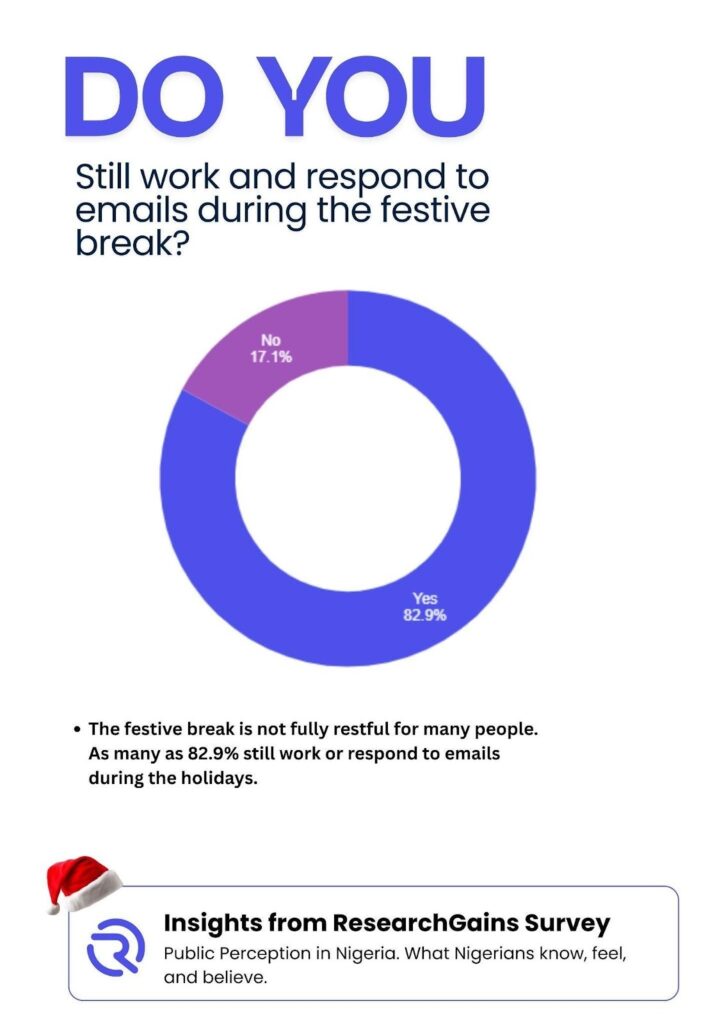
The festive season no longer guarantees a full break from work. As many as 82.9% report that they still work or respond to emails during the holidays, while only 17.1% say they fully disconnect. This reflects a changing work culture and the growing overlap between professional and personal time.
Link to Dataset: https://www.researchgains.com/research-gains/datasets/947
Christmas Clothes Purchase Behavior
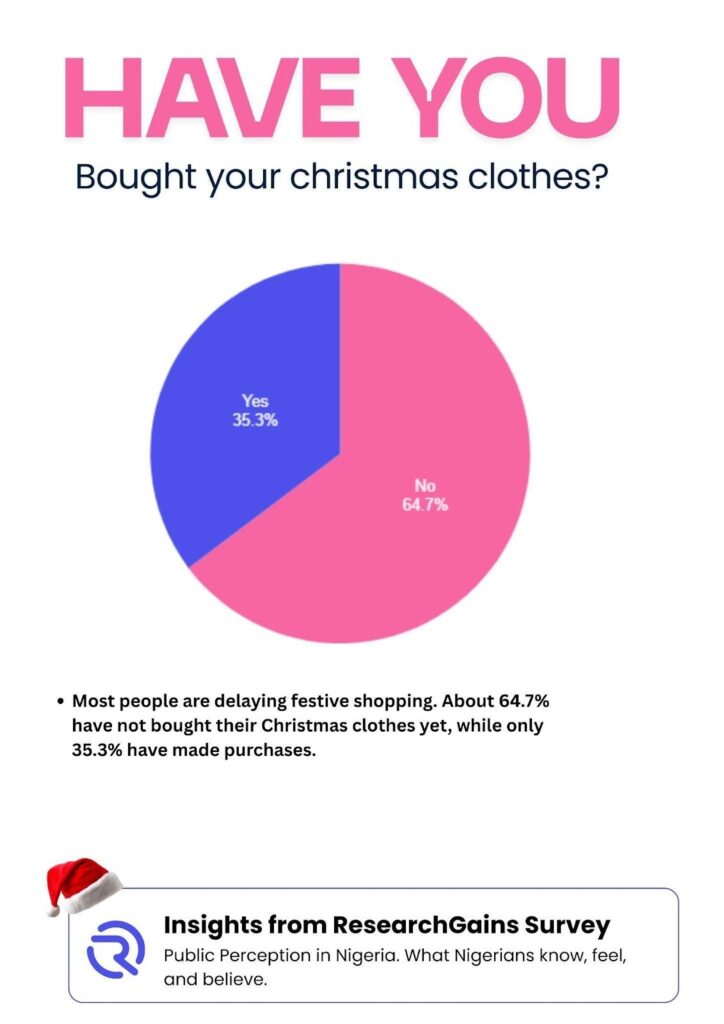
Christmas clothing purchases appear to be approached with caution. About 64.7% of respondents say they have not bought their Christmas clothes, while only 35.3% have made these purchases. This suggests delayed spending decisions and a careful approach to discretionary expenses during the festive period.
Link to Dataset: https://www.researchgains.com/research-gains/datasets/934
New Year Priorities
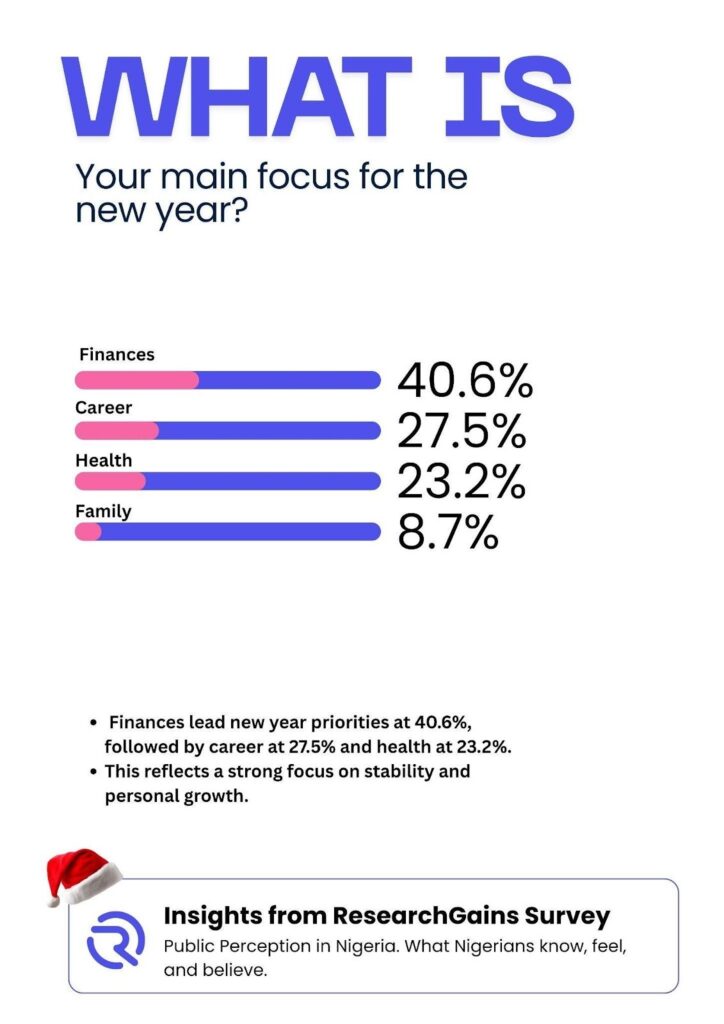
As the year draws to a close, finances emerge as the leading focus for the new year at 40.6%. Career follows at 27.5%, while health accounts for 23.2%. Family is identified by 8.7% of respondents. These priorities reflect a strong desire for financial stability, career growth, and improved personal well-being.
Link to Dataset: https://www.researchgains.com/research-gains/datasets/937
Festive Mood and Emotional Outlook
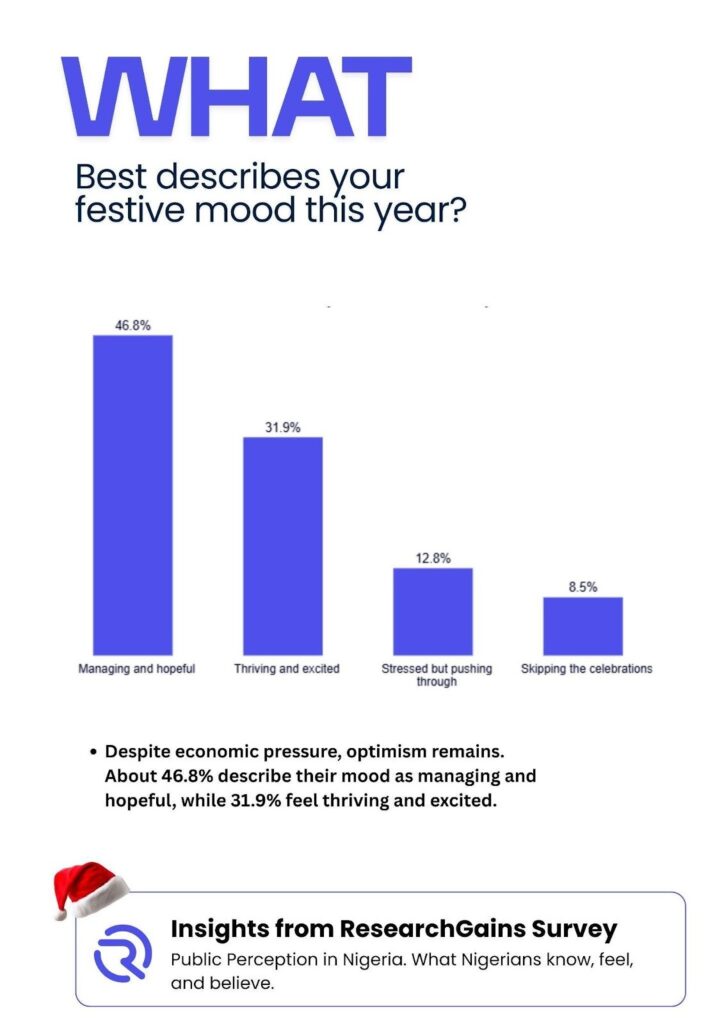
When asked about their festive mood, 46.8% describe themselves as managing and hopeful. Another 31.9% say they are thriving and excited. Smaller proportions report feeling stressed or skipping celebrations altogether. This balance shows that even in challenging conditions, optimism remains present.
Link to Dataset: https://www.researchgains.com/research-gains/datasets/940
Gift-Giving Expectations
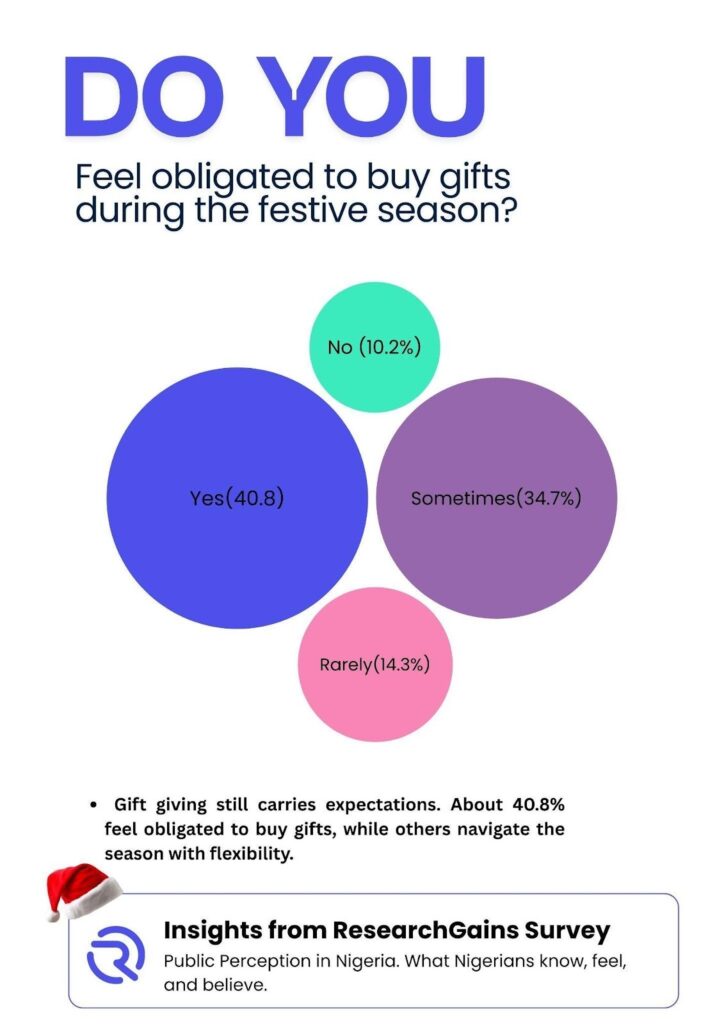
Gift giving continues to play an important role during the festive season. About 40.8% feel obligated to buy gifts, while 34.7% sometimes feel this pressure. Another 14.3% rarely feel obligated, and 10.2% feel no obligation at all. This suggests that while social expectations remain strong, many people are redefining how they participate.
Link to Dataset: https://www.researchgains.com/research-gains/datasets/939
Conclusion
The ResearchGains festive season opinion polls reveal a festive period shaped by thoughtful choices and adaptation. People are celebrating, but with greater awareness of their financial realities, safety concerns, and work commitments. Food, family, and hope remain central, while planning for stability and growth defines the outlook for the new year.
Through these insights, ResearchGains continues to amplify real voices and real experiences, using data to tell stories that truly reflect society.